
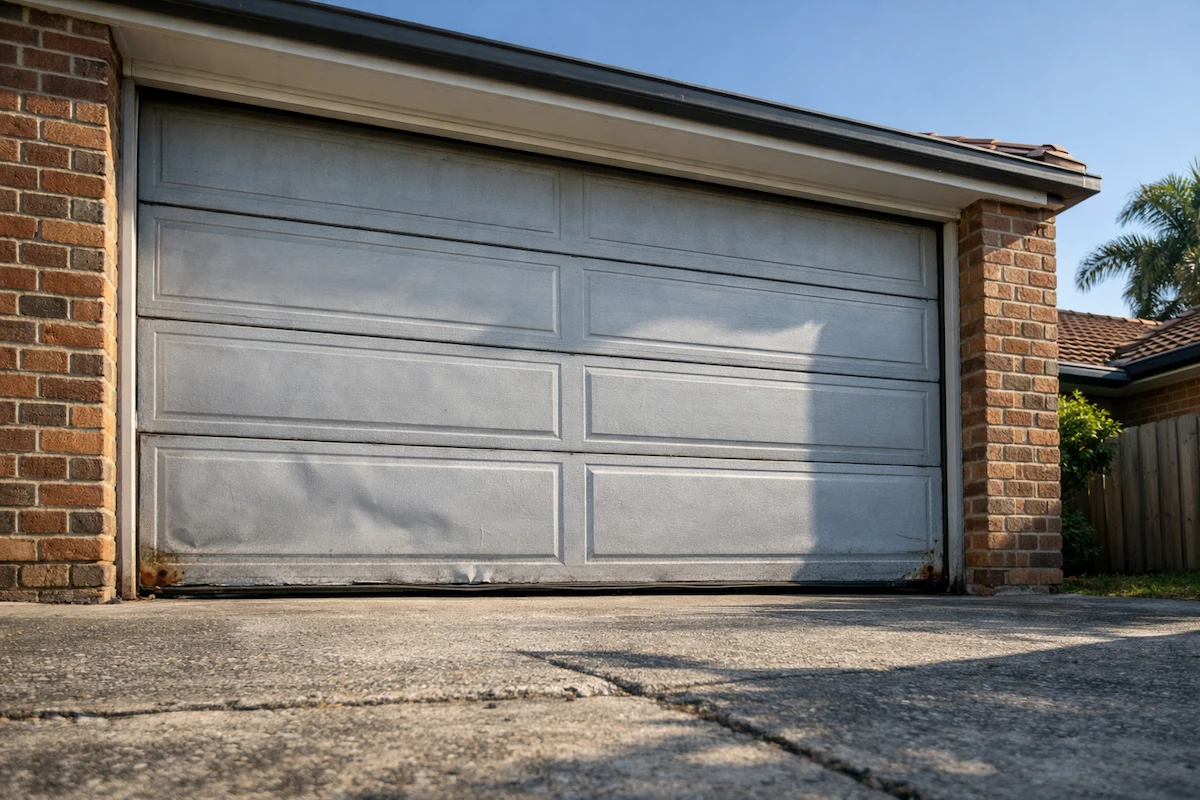
Your garage door is the weakest part of your home because it combines old security systems, poor insulation, and hidden structural problems that get worse every year without you noticing.
Look, nobody wakes up thinking about their garage door. But that rattling noise when it closes, or the visible gaps between panels, aren’t just annoying. These are signs your door is failing in ways that affect your security, your comfort, and your wallet.
Drawing from our experience inspecting garage doors throughout Brisbane, we know exactly where these problems start and how fast they escalate. And we’re sharing what you need to watch for.
Here’s what we’ll cover:
- Three weak spots thieves check first
- Why your garage is driving up energy bills
- Structural failures you can’t see coming
- Basic safety features your door might be missing
Read on to learn what’s wrong with your garage door and what’s worth fixing.
Garage Security Gaps Most Homeowners Miss
Your garage door has three main security weak points that burglars check first: the lock, the windows, and the panels themselves.
And here’s the thing, most people don’t realise how easy these are to exploit until it’s too late. Burglars know garage security gets less attention than front doors, and once they’re inside your garage, they’ve got direct access to your house through internal doors.
Let’s break down each weakness so you know what to look for and how to fix it before someone else finds it first.
1. Flimsy Locks That Won’t Stop a Determined Thief
If your garage door lock looks the same as it did when you moved in 10 years ago, a thief can probably open it faster than you can.
The thing is, most garage doors across Australia still use the same lock design that was standard 15-20 years ago. And thieves know exactly which brands have weak points and target them first, especially older models with exposed lock cylinders.
Reality Check: Old single-point locks rely on a basic latch mechanism that burglars can pick in under 30 seconds with tools you’d find at any hardware store.
2. Windows That Give Burglars a Perfect View Inside
Clear windows let anyone walking past see your tools, bikes, cars, and entire storage layout. This makes it easy for burglars to decide if your garage is worth breaking into before they even touch the doors.
However, frosted film, curtains, or blinds block visibility without removing natural light from the space. Covering your windows keeps your garage functional while keeping your belongings hidden from view.
3. Weak Door Panels You Can Dent With Your Hand

Press your hand against your garage door panel and see how much it flexes. That’s exactly what a burglar checks for.
Thin aluminium panels bend easily under pressure, creating gaps wide enough for pry bars or even hands to force the doors open. The material in cheaper roller doors uses hollow slats that crack after minor impacts or weather exposure.
A damaged panel compromises the entire door’s strength and security immediately, which is why checking your doors for dents or warping should be part of regular maintenance.
Break-Ins: Why Thieves Love Targeting Garage Doors
Thieves love targeting garage doors because they’re easier to open than front doors, less visible from the street, and give direct access to your house once they’re inside.
Garages have become a prime target for break-ins across the country because most people secure their front entrance but leave garage doors with basic locks or no locks at all. You might lock your house religiously every night, but if you have an attached, unsecured garage, burglars only need to get through one weak point.
Once inside, thieves have time to work without being seen. Your garage stores high-value belongings like tools, bikes, and cars that thieves can easily sell.
But the more serious issue is access. Most garages connect directly to living areas through internal doors, which means a simple garage theft can become a full house break-in if that door isn’t secure.
Poor Home Insulation Starts in Your Garage
Your garage door is one of the largest uninsulated surfaces in your home. When it’s old or poorly sealed, it becomes a huge entry point for heat in summer and cold in winter.
Usually, garages share at least one wall with the main living spaces, and heat transfers straight through. Also, poor home insulation causes your air conditioner to work harder, which shows up on your power bill every quarter.
See where the heat is getting in and what it’s costing you.
How Heat Escapes Through Your Garage Door
Heat escapes through gaps around the door edges, between individual slats, and through thin panels that have no insulation layer inside them.
The main problem areas are the rubber seals along the bottom and sides of your garage door. Over time, these seals crack and shrink, leaving gaps that let hot air flow straight in during Australia’s summer months. Old doors also lack foam insulation and thermal breaks in their construction, which means the metal or aluminium conducts heat directly into your garage.

Once heat builds up inside your garage, it transfers through the shared wall and ceiling into your house. A poorly sealed garage door affects the entire home’s temperature, especially in rooms that sit above or next to the garage space.
What Bad Insulation Really Costs You
Your air conditioner runs constantly, trying to offset the heat coming through the garage, which impacts both energy efficiency and the cost of keeping your house cool in summer or warm in winter.
Without proper insulation, your system works overtime in summer’s heat, which means higher carbon emissions just to maintain comfortable living areas. The extra strain also shortens your air conditioner’s lifespan and increases the likelihood of breakdowns during peak summer, when you need cooling most.
Easy Solution: Replacing an old garage door with modern insulation reduces your home’s overall energy consumption and keeps indoor temperatures stable without forcing your system to compensate.
But insulation isn’t the only hidden problem. Structural issues are developing inside your garage door right now that you can’t see until they cause serious damage or leave you stuck.
Structural Problems You Can’t See Until It’s Too Late
Most homeowners don’t maintain their garage doors regularly, which means small issues like worn seals or rusty tracks become major failures over time.
The problem is, you won’t notice these developing until something breaks completely or your door stops working. And by the time you see visible damage, the repairs usually cost more.
Here’s what to watch for before it’s too late:
Warped Panels and Broken Seals Letting Weather In
Catching warped panels and broken seals early saves you from dealing with water damage, mould, and expensive repairs later.
Panels warp from heat and humidity, which creates gaps you don’t notice immediately (and the damage adds up fast). The warping happens gradually over months, especially on north-facing garage doors that get full sun most of the day. Once a panel warps, it pulls away from the frame and creates entry points along the wall.
Rubber seals deteriorate over time, allowing rain, dust, and pests to enter freely. Small gaps get worse over months until you end up with water damage or mould spreading across your garage floor and into storage areas.
Rusty Tracks That Fail Mid-Operation
When you hear grinding noises or notice the door struggling to open smoothly, you’re already hearing springs and tracks that are close to failure.
We’ve found through hands-on work that coastal salt air in areas around Brisbane and across Australia corrodes metal tracks faster than most homeowners expect or check. The rust builds up in the roller channels and eventually stops the door from operating properly, which can damage the motor if you keep forcing it.
Does Your Garage Meet Basic Safety Standards?
Australia has specific safety requirements for garage doors, and if your door dates back to before 2017, there’s a good chance it doesn’t meet them (since new legislation came into effect in 2017).
Over the past decade, Australian Standards have changed to address injury risks, fire spread, and entrapment hazards, especially for garages attached to homes or used in rental properties.
So what does your garage need to meet current safety requirements?
Smoke Alarm Requirements for Attached Garages
The updated smoke alarm legislation requires buildings with garages attached to living areas to have smoke alarms installed, and all properties must comply by 1 January 2027. These rules exist because garages commonly store flammable liquids, lithium batteries, power tools, and vehicles, all of which increase fire risk in enclosed spaces.
Auto-Reverse Sensors Every Garage Door Needs
All modern garage doors need auto-reverse safety systems. These systems detect obstructions and immediately stop or reverse the door during closing.
The most common setup uses photoelectric safety sensors, which send a beam across the opening. If anything breaks the beam, the door reverses instantly. So if a child, pet, or vehicle moves into the path while the door is closing, the sensor triggers an immediate stop.
Why Proper Lighting Is Essential for Security

Good lighting around your garage removes hiding spots and makes thieves think twice before trying anything. On the other hand, dark garages provide cover for burglars to work undetected for extended periods, which gives them time to force doors open or disable security systems.
Use lighting strategically around entry points:
- Motion-activated Sensors: Motion-sensor lights startle intruders and alert neighbours to suspicious activity around your garage, which adds an extra layer of protection beyond just secure locks.
- Solar-powered Options: If you don’t want to run electrical wiring, LED solar options are affordable, easy to install, and work just as well for deterring break-ins.
Proper lighting can enhance your overall garage security and act as a deterrent before anyone even attempts a break-in.
Advanced Upgrades vs. Complete Replacement: What’s Actually Worth It?
We recommend investing in upgrades like new locks and weatherstripping if your door hasn’t reached 10 years yet and remains structurally sound. But go for a complete replacement if you’re dealing with warped panels, broken springs, or doors older than 15 years.
The right choice depends on how much life your current door has left and whether small fixes will solve the underlying problems.
Adding keypad locks or electronic systems costs $200-500 and improves convenience without major installation work. These upgrades make sense when your garage door still operates reliably, and you just want better security features.
Meanwhile, new insulated roller doors with modern security features cost $1,500-3,000, depending on size and quality. At the end of the day, a full replacement gives you better insulation, updated safety systems, and a range of security options that older doors simply can’t support.
So if you’re constantly dealing with repairs or your door fails basic safety standards, replacement is the only real solution.
Give Your Garage Door the Check It Deserves
Your garage door handles constant use every single day, but you probably ignore it until something breaks or stops working completely.
The good news is that most of these problems are fixable if you catch them early. Check your locks, test your seals, and make sure your safety features actually work. If you’re renting, contact your landlord about getting compliant smoke alarms and auto-reverse sensors installed on the property.
Don’t wait until a break-in or a breakdown forces your hand. A functioning garage door gives you security, protection, and the confidence that your home is secure.
Visit our website at The Not Vanilla for a professional inspection or to discuss replacement options that fit your property and budget.