
Every year, Australian homes cop a beating from wild weather. Heatwaves turn garages into ovens, cold snaps make them feel like fridges, and storms batter doors until something gives. If you’ve got a roller door on your garage, you know the struggle.
Here’s the thing, though. Insulation could’ve kept your garage 10-15 degrees cooler in summer and warmer in winter during those extremes. Not a miracle fix, but enough to keep your space liveable and stop your air conditioner from working overtime.
That’s what roller door insulation does. It sits between the door panels and blocks heat, cold, and noise from flooding in. Let’s break down why it makes more of an impact than most people realise.
What Is Roller Door Insulation and How Does It Work?
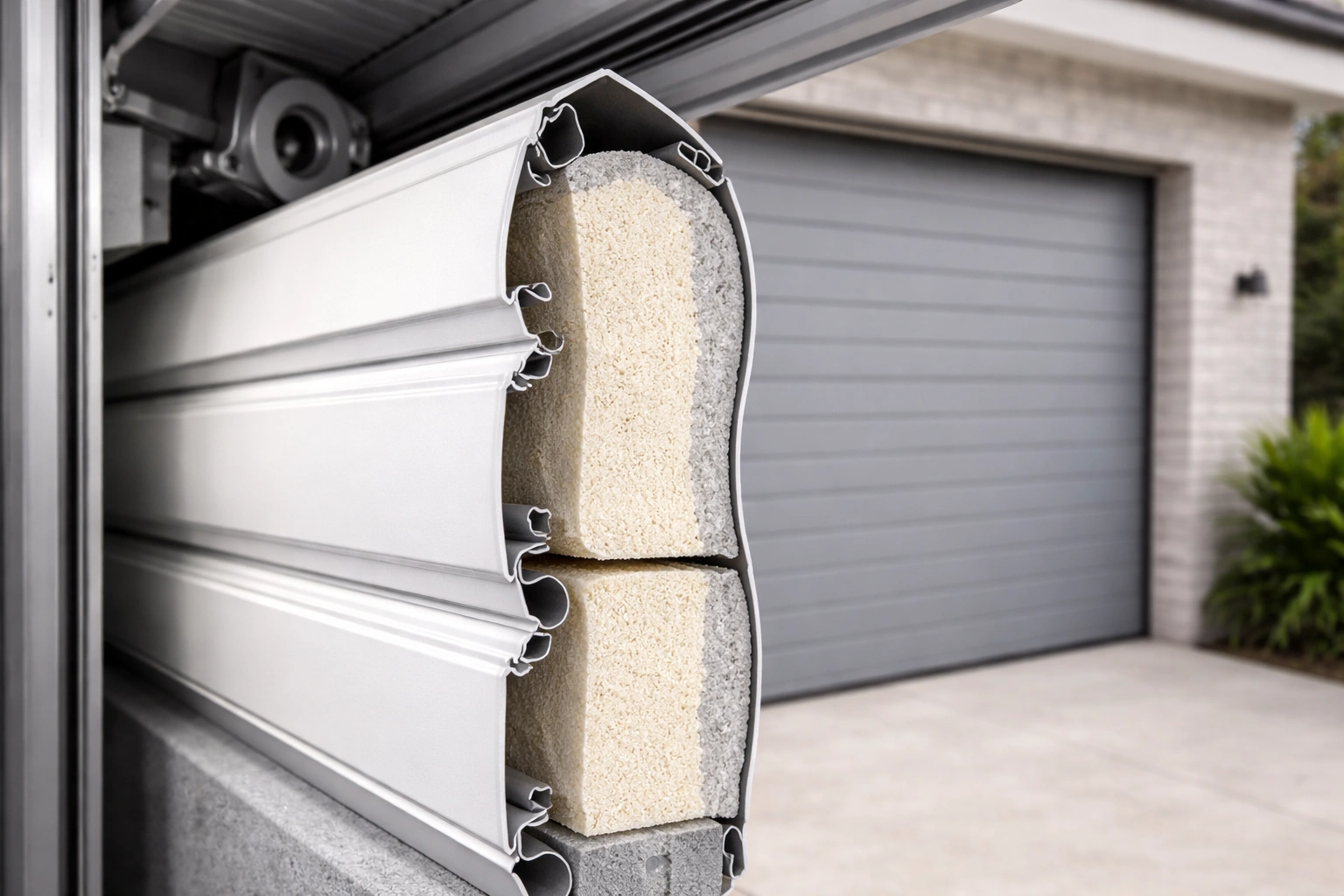
Roller door insulation is a foam layer sandwiched between aluminium slats that blocks heat and cuts down outside noise. The foam sits inside double-skin panels, forming a thermal barrier that slows how quickly outdoor temperatures affect your garage.
This construction works by trapping air within the foam. Air doesn’t conduct heat well, so when the outside of the door heats up or cools down, far less of that temperature change passes through to the inside. The door still reacts to the weather, but your garage stays noticeably more stable. You might wonder how something this simple works so well, but that’s exactly the point.
The Financial Impact on Your Energy Bills
The biggest win with insulated roller doors is watching your energy bills drop without changing how you use your garage. Less heat moves through the door, so your air conditioning doesn’t have to work as hard in summer, and your heating runs less in winter. The financial benefit shows up in two main ways.
Upfront Cost vs Long-Term Savings

Insulated roller doors cost more initially, but the energy savings stack up month after month over the years of use. The price gap between insulated and non-insulated models gets smaller when you add up reduced heating and cooling costs annually, which most people don’t think to do until they’re a few years in.
Most homeowners recover the extra upfront investment within three to five years through lower electricity bills alone. Sometimes faster if they’re running climate control in the garage. If you’re on a budget, think of it this way: you’re paying a bit more now to cut ongoing costs for the next 15 to 20 years. That’s worth the extra spend.
Lower Running Costs Through Better Temperature Control
Without insulation, your garage acts like a heat sink in summer, forcing air conditioners to work harder continuously. Australian homes with attached garages see the biggest difference because the garage temperature bleeds straight into the house.
That means your air conditioning system has to cool not just your living spaces, but also compensate for the heat leaking in from next door.
In winter, uninsulated doors let cold air flood in, making heaters run longer to maintain comfortable temperatures inside. Insulation reduces this temperature transfer, so your air conditioning and heating systems cycle less and use less power overall. The result is lower energy bills every month, whether it’s 40 degrees outside or 10.
Year-Round Comfort: Beyond Temperature Control
Your garage probably swings between sauna and icebox depending on the season, and if it’s attached to your home, you feel it inside, too. But temperature isn’t the only issue. Sometimes it’s noise from the street, other times it’s dust blowing in through gaps. Insulation handles all these issues, starting with sound.
Noise Reduction and Sound Dampening
Foam insulation absorbs sound waves from traffic, neighbours, and street activity before they reach your garage interior. The dense foam layer also softens the mechanical noise your roller door makes when opening and closing each time.
This works best when your garage shares a wall with bedrooms or living areas in your home. You’ll notice the difference straight away.
That same barrier also limits draughts. Unsealed air gaps let wind push through, carrying dust, pollen, and moisture with it. Standard doors without insulation can’t stop this kind of air leakage.
The result is less dust settling on your tools and less moisture building up in corners. Your garage space stays cleaner and drier year-round. That kind of comfort adds up when you’re using the area as a workshop or storage for anything you actually care about.
How Insulation Protects Your Roller Door

If you think insulation only improves comfort, that’s only part of the story. Insulated roller doors also hold up better over time than single-skin models. The insulation adds protection in a few practical ways.
- Structural Rigidity: The foam core adds strength to each slat, so it’s harder to dent them from accidental bumps or impacts. You get a more solid panel that holds its shape.
- Temperature Resistance: Insulated slats handle extreme temperature swings without warping or deforming over time. Single-skin doors, on the other hand, expand in the heat, contract in the cold, and repeat that cycle for years until something gives.
- Extended Lifespan: The extra strength from the foam prevents wear that normally shortens door lifespans. Insulated doors hold up better over time, which means fewer service calls and less panel replacement down the track. That saves you money on maintenance you’d otherwise need.
The protection benefit isn’t obvious at first, but it’s one of the reasons insulated doors are worth considering, even if temperature control isn’t your main concern.
What to Look for in an Insulated Roller Door
It depends on what you need from your garage. But in most cases, three factors determine how well the insulation performs: foam thickness, R-value ratings, and whether it’s built in from the factory or added later.
Foam thickness typically ranges from 5mm to 17mm, depending on door size. Thicker foam blocks more heat transfer, and residential doors usually sit somewhere in the middle of that range.
As for R-value, it’s the measure of thermal resistance. The higher the number, the better the insulation. Use this to compare different models and work out which one actually delivers what you’re paying for.
When it comes to installation, factory-built insulation is the clear winner. The foam is sealed within the slats from the start, so the door’s designed to handle the extra weight. Sticking insulation to the curtain might seem easier, but it adds weight that strains the motor and can void your warranty.
When Should You Consider an Insulated Roller Door?

Insulated roller doors make the most sense when your garage connects to your home, gets used as a workspace, or faces extreme weather conditions. A few scenarios stand out where insulation pays off:
- Attached Garages: Temperature changes in the garage directly affect your home’s heating and cooling efficiency. If your garage shares a wall with your house, the insulation stops heat or cold from bleeding through into your living spaces.
- Workshop or Gym Use: If you use your garage as a workshop, gym, or storage for temperature-sensitive items, insulation keeps the space comfortable enough to actually use. You won’t be fighting the heat or cold every time you walk in.
- Extreme Climates: Living in areas with scorching summers or freezing winters? Insulation helps cut your energy costs. The more extreme your weather, the harder your air conditioning and heating systems work without it.
- Commercial and Business Spaces: Offices, sheds, and commercial garages need insulation to protect temperature-sensitive products and keep the workspace comfortable. The investment pays off faster when you’re running climate control year-round.
Even if just one of these situations fits your garage, insulation can improve how the space performs and cut your running costs over time.
Make Your Garage Work Harder for You
Roller door insulation goes beyond keeping your garage comfortable. It cuts energy costs, blocks noise, protects your door from wear, and makes the space usable year-round. The benefits add up whether you’ve got an attached garage or use the space as a workshop.
If you’re thinking about upgrading, focus on foam thickness, R-value ratings, and factory-built options. These factors determine how well the insulation actually performs over time.
Need help choosing the right insulated roller door for your home? Get in touch today for advice on the best options for your garage and budget.