
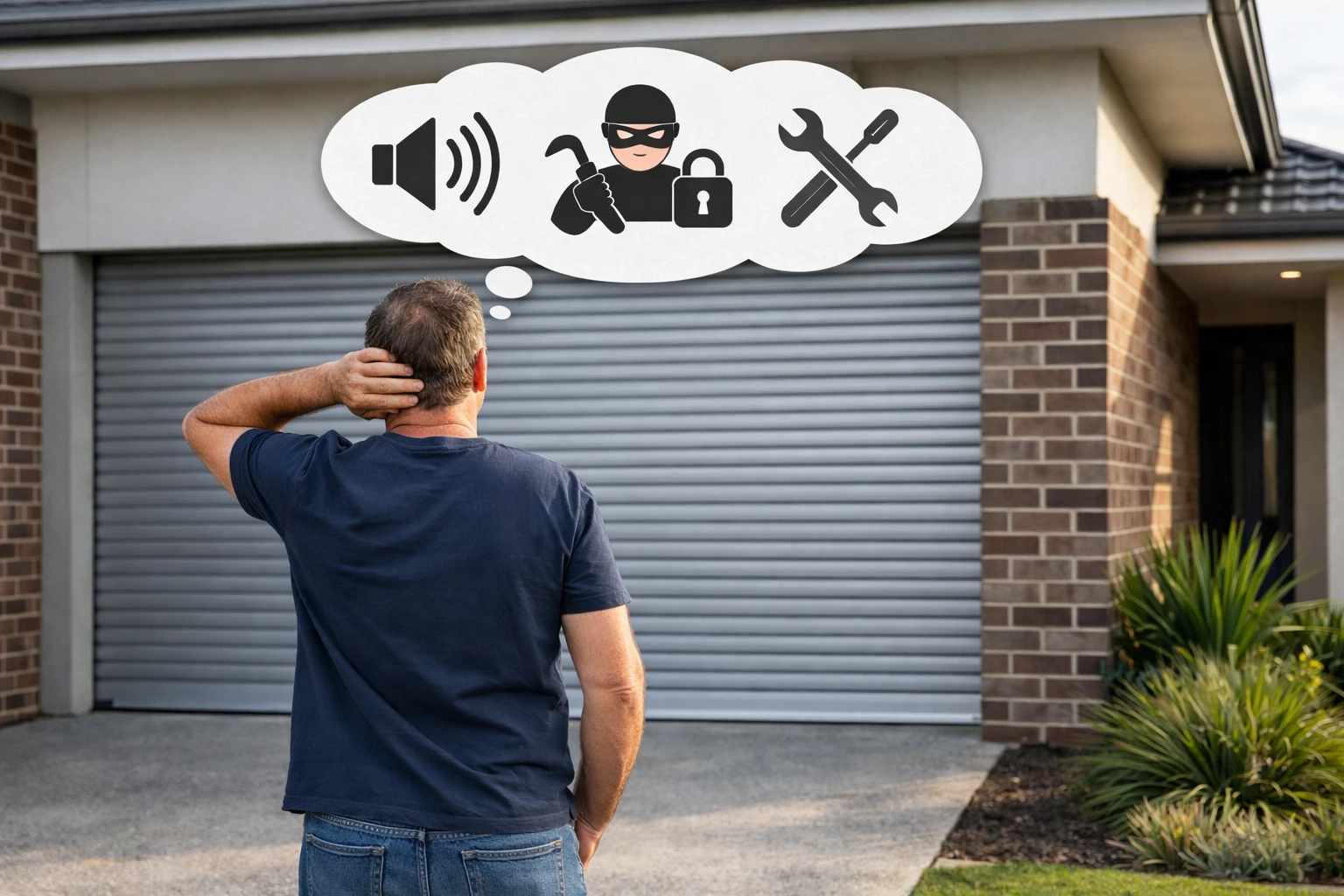
You’ve been standing in your driveway for the third time this month, watching your roller door struggle to open. That grinding noise again. A neighbour mentions it might be time to replace the whole thing, and you start wondering whether roller doors really only last about 10 years.
Sound familiar? Many Australian homeowners make costly decisions based on outdated roller door myths. Doors that only need a quick fix or basic maintenance get replaced entirely.
This article breaks down the most common roller door myths homeowners still believe. You’ll learn which problems are easy DIY fixes, what maintenance prevents breakdowns, and when you genuinely need professional help versus when you’re being oversold.
Myth 1: Roller Doors Are Only Suitable for Garages
Most people picture roller doors in one place: the garage. That narrow view misses how much these doors have evolved beyond just covering your car.
Modern roller doors now serve a wide range of spaces, including:
- Commercial Shopfronts: Walk through Melbourne or Sydney’s retail strips, and you’ll see roller doors securing storefronts overnight. They disappear during business hours, keeping the street looking open and inviting.
- Home Workshops and Storage: When you don’t have ceiling space for a traditional door’s swing, roller doors solve the problem. They roll up compactly and give you full access without eating into your workspace.
- Internal Partitions: Transparent or perforated designs let you divide warehouse spaces (or even open-plan homes) without blocking natural light. You get separation when you need it and openness when you don’t.
The slat profiles, colours, and finishes available now mean roller doors can match contemporary architecture instead of just serving a practical purpose. They’ve gone from purely functional garage equipment to versatile solutions that work across different settings.
Myth 2: All Roller Doors Are Noisy and Disruptive

No, modern roller doors are not inherently noisy. If your roller door sounds like it’s announcing your arrival to the entire street, you’re probably dealing with an older unit (or one that hasn’t been maintained properly).
Over the past decade, roller doors have gotten a lot quieter. Modern guides use nylon rollers instead of noisy metal-on-metal parts, and the slats now interlock smoothly. Some premium models even include rubber inserts between panels that absorb vibration before it can echo through the structure.
The difference is clear when you compare a modern door to one installed fifteen years ago. Older units were made from simpler materials and less precise engineering, so every cycle came with grinding, rattling, and creaking noises.
Myth 3: Manual Roller Doors Are Just as Convenient as Automatic Ones
Manual doors work fine if you don’t mind the extra steps. But calling them “just as convenient” ignores the daily friction they create. That small struggle each time you enter or leave the garage might seem minor, but it adds up fast.
With automatic doors, you press a button from inside your car, and you’re done. No stepping outside, no lifting, no hassle. Manual doors force you into a routine many homeowners don’t realise is slowing them down:
- Step Outside in Any Weather: Rain, heat, or cold becomes part of the process every time you open the door.
- Lift Heavy Doors: The weight strains your back and arms, especially on older or larger doors.
- Deal with Stuck Mechanisms: Rust or misalignment makes opening difficult, sometimes impossible without tools.
When your hands are full of groceries, you’re managing kids, or you’re exhausted after work, manual doors add friction to every trip. Automatic doors remove that entirely.
Myth 4: Roller Doors Require Constant Maintenance and Repairs

No, roller doors don’t need constant maintenance. Today’s doors are built with tougher materials and simpler mechanisms, so a quick check and a bit of cleaning now and then keeps them running smoothly for years.
In fact, a well-maintained garage door can last 20 to 25 years with minimal repairs, according to the NARPM life-expectancy chart.
Here’s what routine maintenance actually looks like:
- Inspect the Tracks and Rollers: Check every six months for dirt buildup or alignment issues that could cause friction.
- Lubricate Moving Parts: A quick spray of lubricant on hinges and rollers twice a year keeps everything running smoothly.
- Clean the Door Surface: Wipe down the slats to prevent grime accumulation that can wear down the finish over time.
Like the automatic doors we talked about earlier, modern systems are designed to work reliably with minimal intervention. You’re not looking at constant repair bills or weekend projects just to keep your door functional.
Myth 5: Insulated Roller Doors Don’t Make Much Difference
Many homeowners skip insulated doors, thinking the extra cost isn’t worth it. The energy savings tell a different story.
Insulated roller doors reduce heating and cooling costs by maintaining stable temperatures in your garage or workspace. This is possible because the foam core between steel or aluminium panels creates a thermal barrier that keeps heat inside during winter and blocks it during summer. You also get noise reduction as a bonus.
The result? Lower energy bills. Think about a Melbourne workshop during winter. Without insulation, you’re running heaters constantly to keep tools and materials at workable temperatures.
With an insulated door, your heating system works less because the warmth stays trapped inside. The same applies in summer. Your cooling costs drop when hot air cannot penetrate as easily.
Over three to five years, the energy savings typically cover the higher upfront cost of insulated doors. The exact payback period depends on your climate and how often you use the space, but most homeowners see lower monthly bills within the first year.
Myth 6: Roller Doors Are Easy Targets for Break-Ins

This myth comes from outdated roller door designs that relied on simple latches and thin metal slats. Burglars could pry them open or force the bottom rail up in under a minute. Those weaknesses shaped the reputation roller doors still carry today. Modern roller doors include security features that older models never had.
Modern Locking Systems
Current roller doors use multi-point locking systems that secure the door at several points along the track rather than relying on a single latch. Some models also include automatic deadbolts that engage once the door fully closes, so there is no chance of forgetting to lock it. A door secured at multiple points is far harder to force open than older single-lock designs.
Reinforced Construction
Manufacturers now use thicker aluminium profiles and steel-reinforced slats that resist prying and forced entry attempts. The interlocking design creates a solid barrier when closed, and reinforced bottom rails add another layer of protection against lifting attacks.
Additional Security Features
Smart-enabled roller doors let you check if your garage is closed from anywhere and send alerts if someone tries to open it while you’re out. Some systems include built-in alarms that activate during unauthorised access attempts. These features are optional add-ons, not standard, but they’re becoming more common as prices drop.
Myth 7: Replacing a Roller Door Is Always Better Than Repairing It

Have you ever been told your entire roller door needs replacing when a broken spring or worn roller could be fixed for a fraction of the cost? This happens more often than homeowners realise. Some companies push replacement because it’s more profitable, while others genuinely overestimate how bad the damage is.
In reality, most roller door problems are repairable:
- Broken Springs: Replacement takes under an hour
- Worn Rollers: A Simple swap prevents track damage
- Motor Issues: Often resolved with a reset, adjustment, or basic cleaning
Replacing a roller door typically costs between $800 and $3,000, depending on size and features. Most repairs fall between $150 and $400. Unless the door has serious structural damage or a severely corroded frame, repairing individual components can keep it operating reliably for years.
Myth 8: All Roller Door Materials Perform the Same Way
Not all roller door materials are built equally. The material you choose affects performance in ways most homeowners overlook until something goes wrong.
Here’s how common roller door materials compare:
- Steel: Strong and secure, but heavy (which puts more strain on your motor over time). Corrosion becomes an issue in coastal areas unless you apply protective coatings regularly.
- Aluminium: Lighter weight means less wear on mechanical parts, and it resists rust naturally. The trade-off? It dents more easily than steel, so think twice if you park in tight spaces.
- Colorbond: Pre-treated steel with a colour-bonded coating that handles Australia’s harsh sun and salt air better than plain steel. You get durability and weather resistance without constant maintenance.
Your environment determines which material performs best. A beachside home in Queensland needs different protection than a dry inland garage. Choose based on your conditions, not just upfront cost.
Don’t Let These Myths Cost You Money
Most roller door problems stem from outdated information rather than real mechanical failures. With proper maintenance, modern doors can last decades, and repairs usually cost far less than full replacement.
Start with basic maintenance. Keep the tracks clean, lubricate moving parts twice a year, and check for visible wear. If something does go wrong, get a second opinion before committing to replacement. Many “necessary” replacements turn out to be simple, inexpensive fixes.
Your roller door isn’t doomed to fail or rack up costly repairs. Knowing what’s myth and what’s reality helps you make smarter decisions and save money. If you need a second opinion or honest repair advice, get in touch with us.