
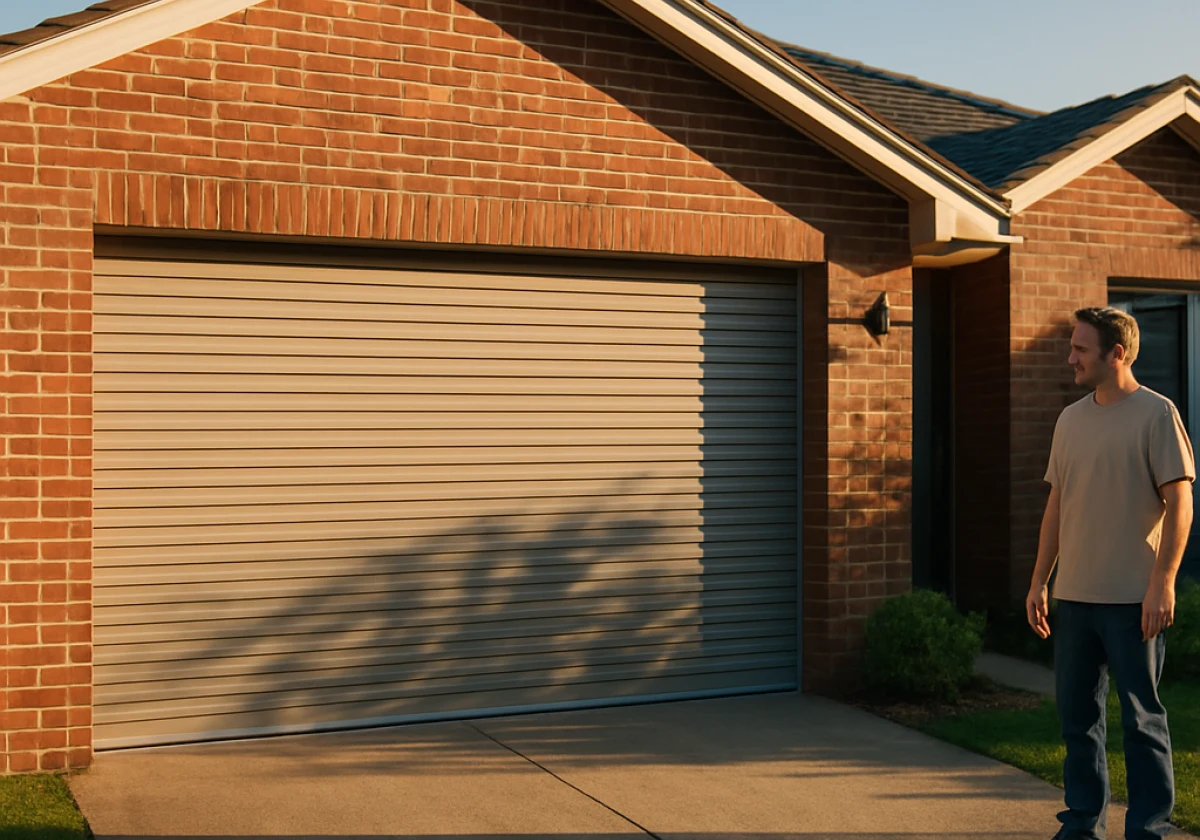
Property owners should check accurate measurements, safety features, garage door motors, and professional installation when installing a roller door. Those four checks affect how reliably the door operates and how well it holds up through years of daily use.
Most trouble during garage door installation we see starts long before fitting day. Specifically, when someone estimates the opening size instead of measuring it accurately. At The Not Vanilla, we’ve heard how a rushed order locks a homeowner into hardware that never quite suits the garage.
This roller door guide explains how to measure your garage opening, compare safety features, and choose a suitable motor. It also covers installation requirements and the practical differences between roller doors and sectional garage doors.
Let’s get into it.
Measuring and Sizing Your Roller Door for a Perfect Fit

Getting the width and height wrong is the most common reason a new fit goes sideways. That’s why crews who install garage door hardware every week measure the fittings three times before buying. For example, a curtain built 20 mm too wide will never sit properly in its guides (builders rarely pour a square opening).
The following measurements below deserve a second pass before you sign off on any quote.
Getting the Right Garage Door Measurements
Start by measuring the clear opening width at the bottom, the middle, and the top of the brickwork. Then write down the smallest of those three figures. That measurement is the space your door has to clear, and the gap between top and bottom can reach 15 mm.
Next, measure the height from the finished floor to the underside of the lintel on both the left and right sides. And pay close attention to sloped driveways, as they can create different height readings across the opening (we’ve seen 30 mm of fall across one opening).
You’ll also need the side room, the flat wall beside the opening where the guide rails bolt on. A garage roller door wants at least 100 mm on each side, so look for taps, meter boxes, and switches.
That available space affects the door size, barrel length, motor rating, and final cost, which makes accurate measurements important during installation.
Allowing Headroom for the Roller Mechanism and Door Motors
Headroom is the space between the top of the opening and the ceiling, and it houses the barrel that your curtain wraps around. Most home roller doors need 300 mm to 400 mm, while wider openings need more because the rolled curtain grows thicker.
Generally, garage door motors sit inside or beside the barrel, so an automatic opener adds to the total clearance. That motor also needs enough power to move the curtain without excessive strain. That’s why you should choose a garage door motor rated for the curtain weight, and it will run cooler for longer.
After confirming the motor requirements, check the available headroom for the entire roller door setup. Measure up to the lowest fixed object rather than the ceiling itself, since pipes, beams, and lights often hang below it.
When your garage falls short, a builder can sometimes raise the lintel, though that turns a simple job into structural work. Honestly, checking headroom first saves more money than any other step.
Roller Doors vs Sectional Garage Doors: Key Differences to Weigh

Before you lock anything in, comparing a roller door with a sectional garage door can save you a costly swap later. Both products do the same job, yet they use the space inside your garage in very different ways.
The table below lines up the five differences worth weighing at quote stage.
| Feature | Roller Door | Sectional Garage Door |
|---|---|---|
| Space needed to operate | Rolls into a barrel above the opening | Slides back on ceiling tracks, using the rear of the garage |
| Headroom and side clearance | 300 to 400 mm headroom, roughly 100 mm each side | Less headroom, more side room for the tracks |
| Insulation performance | Single-skin steel curtain, limited options | Insulated panels up to 40 mm thick |
| Kerb appeal and finish | Ribbed steel in standard colours | Woodgrain, timber-look, and custom designs |
| Typical maintenance needs | Curtain alignment and barrel checks | Yearly servicing of hinges, rollers, and springs |
If you park a ute close to the rear wall, a roller door keeps the ceiling area clear because the curtain rolls into the barrel above the opening. That space-saving design is one reason roller doors suit garages where storage counts.
However, if insulation and street appearance rank higher, sectional garage doors may justify their extra cost.
What Safety Features Should You Check for Property Security Before Roller Door Installation?

Safety sits near the top of the questions we field. So look at the door spring, the motor cut-off switches, and the moving part guards before your installer drives away. For context, a steel curtain weighs 60 kg or more, and the hardware holding it up carries a huge load every single day.
Property security belongs in the same conversation. Around 1.8% of Australian households experienced a break-in during 2024–25, according to the Australian Bureau of Statistics. So a well-fitted door with a secure locking barrel can add another physical barrier against unauthorised entry.
Run through these four checks with your installer while they are still on site:
- Garage door spring tension: A balanced garage door spring lets you lift the curtain halfway and leave it hanging without drifting. But too little load drags on the motor and shortens its working life.
- Roller door openers and sensors: Auto-reverse sensors stop the door the moment something crosses the path underneath. For that reason, test them with a cardboard box rather than your own foot, since roller door openers and sectional garage door openers trip at different speeds.
- Moving parts and guards: Pinch points around the barrel and inside the guides can catch fingers and loose clothing. That’s why every cover should sit flush with no visible gaps.
- Manual override access: Pull the release cord once with the power off so the action feels familiar. Every driver in the house should practise it before a blackout forces the issue.
Finally, watching your installer demonstrate each check beats taking their word for it. This five minutes at handover saves a call-out fee three weeks down the track.
Now that you know what to check, a professional fit brings every requirement together safely.
Professional Installation Protects Your Investment and Your Family
Licensed installers use verified measurements to prepare the correct barrel length and select brackets suited to the garage frame, whether it is brick, timber, or steel.
What’s more, they follow the manufacturer’s door installation instructions, which is what keeps your warranty alive if a bracket fails in year three. Many brands void cover on a door somebody fitted themselves, and that exclusion extends to any later garage door repair claim.
Initially, installing the door yourself looks tempting when you have a pipe wrench and a free Saturday, though the spring barrel is where home jobs go badly wrong. On top of that, tensioned springs release enough force to break bones, and no video warns you about that first slip.
Bottom Line: A roller garage door installation is not a weekend experiment. Check whether the quote covers a series roller door installation kit for your brand, because bracket sets differ between ranges and the wrong one stalls the job.
Ultimately, good tradespeople commission the door and opener together, pair your remote controls, and demonstrate the manual release before packing up. Still, you can request the door installation guide and warranty card at handover. Then file both somewhere you will find them so you can use them later.
Installing the door is only half the value you are paying for. Beyond the fitting, a local crew answers the phone when something starts rattling, and that service outweighs a small discount on quote day.
Get Your Roller Door Installed by Local Professionals
A correctly installed roller door can provide reliable garage access for many years through accurate measurements, suitable hardware, and regular maintenance. Every check in this guide points back to that single outcome.
Take the measurements yourself, then hand them to a team who fit these doors week in and week out. This way, you will spend less time worrying about the door and more time using the space behind it.
Ready to sort your opening? The Not Vanilla supplies and fits roller garage doors for homes and small businesses. Get in touch with us for a measure and quote.