
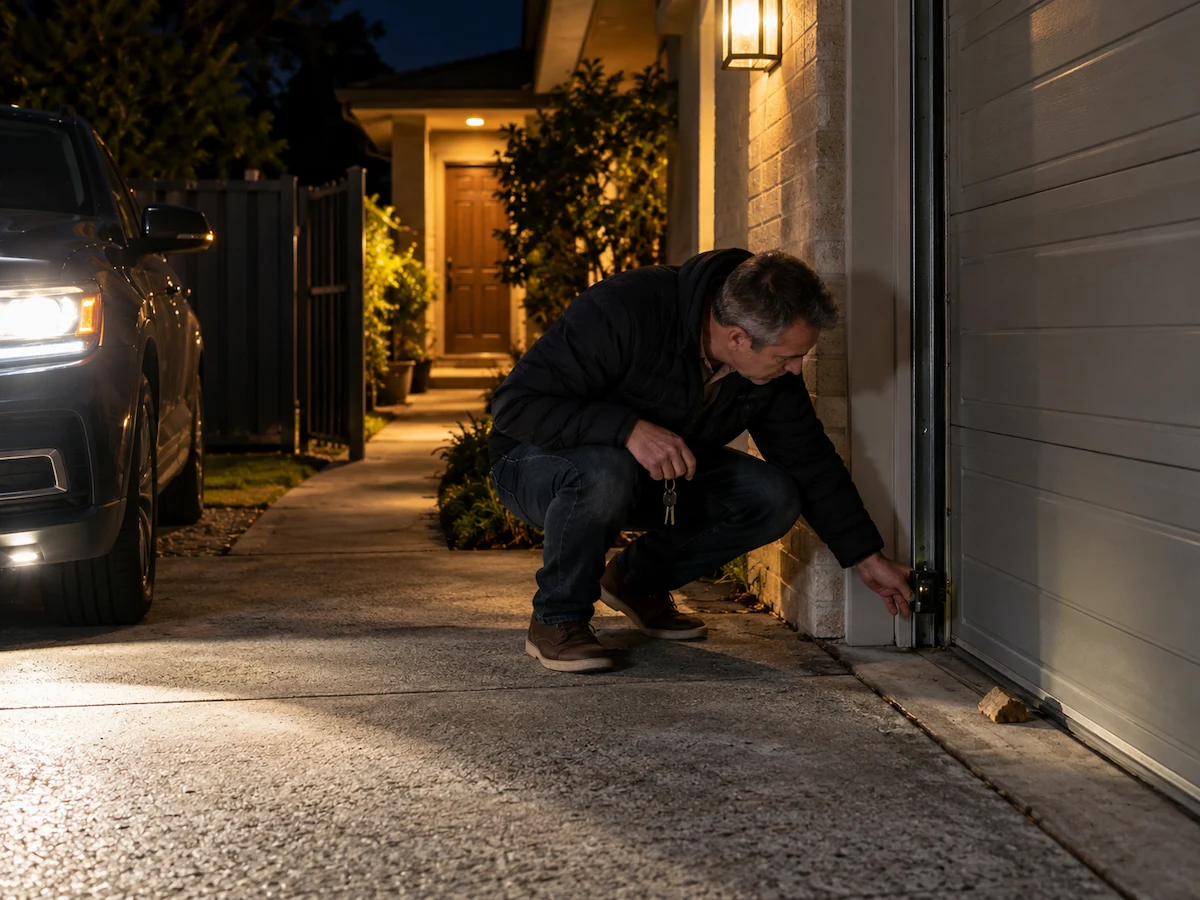
Nighttime use exposes weak garage door lighting, faulty roller door safety sensors, and blocked entry points that daylight hides. You’ll notice those gaps the moment you pull into the driveway after dark.
Most homes run the same garage door setup for years without ever testing it after sunset, which is exactly when small faults become serious hazards. At The Not Vanilla, we field the same after-dark complaints every winter when homeowners use their garage doors in darkness during shorter daylight hours.
This guide explains how garage door lighting, sensor checks, and access upgrades can improve visibility and reduce safety risks when you arrive home after dark. Let’s start with the reason why visibility changes after dark.
Garage Door Lighting After Dark: Why Visibility Changes Everything

Most homeowners never notice their garage door lighting until they’re fumbling for keys in the dark. One dim globe above a double garage can leave the approach path in shadow, which makes driveway edges and nearby obstacles harder to see when walking or parking.
The three areas below cover what goes wrong and what you need to fix it.
How Poor Garage Door Lighting Increases Night-Time Accidents
Poor garage door lighting increases the risk of night-time accidents because your eyes take time to adjust to changes in brightness. During those few seconds, obstacles around the garage entrance may be difficult to see.
In practice, the danger sits right at the threshold. Steps, bicycles and wheelie bins near the entrance can blend into poorly lit areas, which gives drivers and pedestrians less time to notice and avoid them.
We’ve pulled dented panels off doors that were struck simply because the driver couldn’t judge the gap on a moonless night (and the bin never survives either).
What Makes Garage Entrance Lighting Effective After Dark?
Effective garage entrance lighting gives you a clear view of the driveway, garage opening, and nearby obstacles without creating glare. Three factors determine how well it does that:
- Light spread: It should spread evenly across the approach rather than concentrate in one harsh beam. This reduces dark patches where steps, bins, or other obstacles could disappear from view.
- Brightness: Warm white globes around 3000 K can provide comfortable visibility, while overly bright floodlights may create glare that makes details harder to see.
- Fixture placement: The position of each fitting completes the setup. Mounting fittings above head height on both sides of the garage helps illuminate the entrance evenly and reduces shadows around handles, paths, and parking areas.
Together, these three factors give you consistent visibility across the garage entrance while limiting glare, shadows and poorly lit areas.
Motion Sensor Lights and Fixed Fittings Compared
Motion sensor lights switch on as you approach and cut out after a set delay. Meanwhile, fixed fittings burn steadily from dusk until you flick the switch yourself.
Most modern garage door openers include a built-in lamp that usually stays on for only a few minutes. The light mainly covers the inside of the garage, leaving much of the driveway without direct illumination.
Honestly, a pair of sensor lights outside, combined with the opener lamp inside, usually covers the main areas you need to see when entering the garage after dark (we run that exact combination ourselves).
Why Do Roller Door Safety Sensors Need Checking After Dark?

Beyond the fittings, roller door safety sensors need checking after dark because low light hides the dirt and misalignment that block the beam. These safety beams sit low on both sides of the opening and stop the door from closing when anything crosses them.
Work through these four checks on your next evening at home.
- Lens Cleaning: Dust films over the lens within a few weeks, so wipe both eyes with a dry cloth. The beam usually reconnects straight away.
- Beam Alignment: Check the indicator light on each sensor. If one stays steady while the other flickers, the sensors may be misaligned and need adjustment.
- Obstruction Sweep: Often a coiled hose or a stacked box sits just inside the beam path and stops the roller door halfway through its travel. Clear anything blocking the beam, then operate the door again to confirm it closes fully without stopping or reversing.
- Night Reversal Test: With the garage lights off, move a broom handle through the sensor beam while the door closes. The door should stop and reverse immediately, confirming that the safety sensors detect an obstruction.
Five minutes of these checks beats a callout fee on a cold night. However, if any sensor fails the same test twice, you should call a garage door technician rather than giving another wipe.
Choosing Garage Entrance Lighting and Accessories
The right garage entrance lighting and accessories cut night-time accidents and make every entry feel safer. Because garage setups vary, pick the ones that match how you use your garage once the sun drops.
This quick comparison sorts the common options by where they earn their keep.
| Accessory | Best for | Night-time benefit |
|---|---|---|
| Sensor lights | Driveway approach | Lights the path before you park |
| Battery Backup | Power cuts | Keeps garage door openers running |
| Remote control | Roller Doors | Opens the door from inside the car |
| Keypad entry | Sectional doors | Removes the fumble for keys |
Quick Tip: Pair one lighting upgrade with one access upgrade rather than buying two of the same thing. Garage Door Accessories work hardest in combination, and the difference shows on the first dark evening.

Garage Doors Need Better Access Control After Dark
Now that we’ve sorted lighting and sensors, roller door access needs the same attention after dark. Why? Well, Garage doors running a worn remote control leave you idling in the driveway while the receiver struggles. That pause is the moment opportunists watch for.
Modern garage door openers now pair with a smartphone app like MyQ, so you can start the roller garage door opening from the end of the street and confirm it closed later from bed.
Beyond the app, a keypad mounted on the frame gives the kids access without a key, and plenty of gate openers accept the same code (handy when your driveway runs through a gate).
From our own callouts, tired garage door motors cause more late-night lockouts than flat remote batteries, so listen for a straining motor weeks before it gives up. If those warning signs continue after servicing, motor replacement may be the next step. A Power Drive unit with two remote controls can suit many standard residential garage doors.
More importantly, match the motor with current safety features and a gate system that uses the same keypad. This setup keeps access simpler and more reliable when you arrive home at night.
Give Your Garage Door the Night-Time Check It Needs
Your garage door works hardest during the hours when you can see it least. Good lighting, clean sensors and reliable access make everyday night-time entry safer and easier to manage.
Walk out tonight, test the beams and mark every dark patch along the approach. Fixing two of them this week changes how the entry feels for everyone at home.
The Not Vanilla supplies lighting, safety accessories and access upgrades for homes right across Australia. Contact us for a free quote and get your garage doors ready for the dark months ahead.