
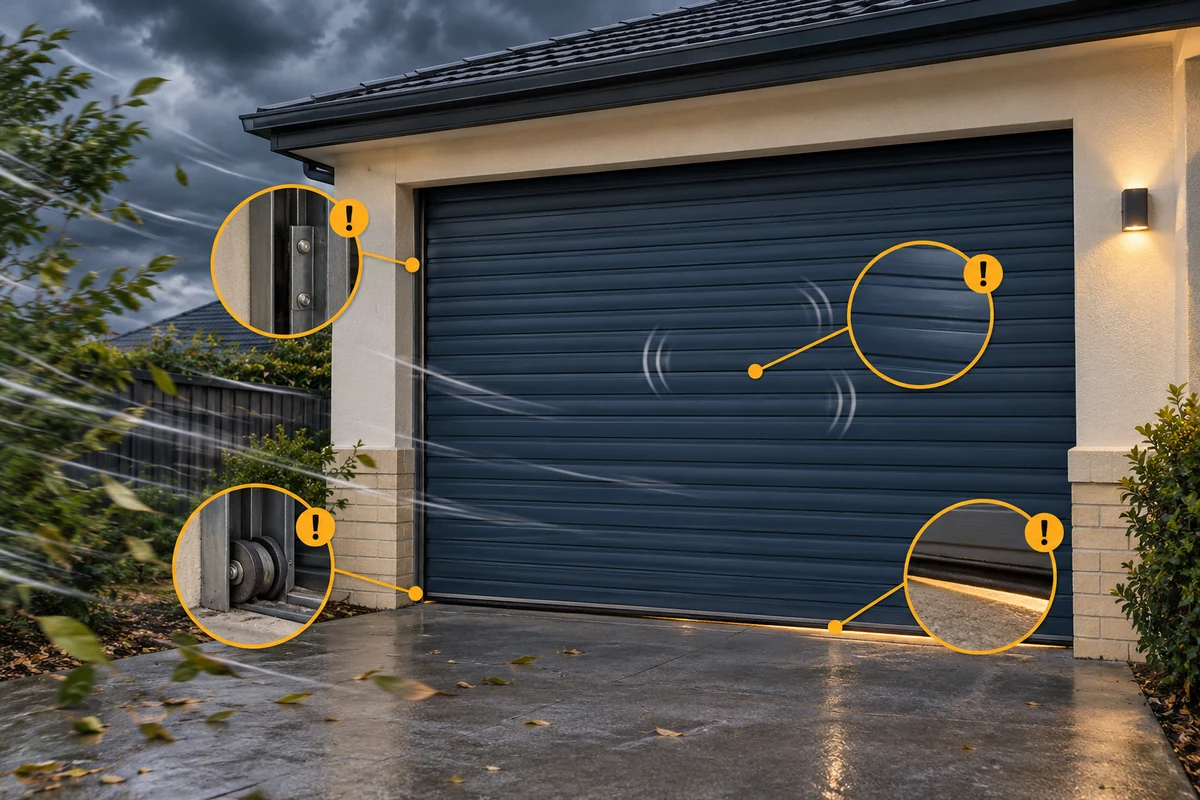
Loose tracks, worn rollers and gaps around the seal are some of the most common reasons a roller door rattles when the wind picks up. But the type of noise you’re hearing can point to a more specific problem.
A light rattle from one side of the door isn’t necessarily telling you the same thing as a loud vibration across the whole curtain. And when strong gusts make the noise worse, the wind can expose weaknesses that aren’t obvious on a calm day.
The good news is that some causes are easier to fix than they sound. Before you start replacing parts or calling someone out, it’s worth checking what your door is actually doing when the wind hits.
In this guide, we’ll look at the common causes of roller door rattling, how wind ratings affect your choice of door, and which fixes you can try yourself first.
Loose Tracks and Worn Rollers

Loose tracks and worn rollers are two of the first things to check when your roller door starts rattling in the wind. Both can give the curtain room to move sideways inside the guides and make the movement more noticeable when gusts hit.
Fortunately, you can often narrow down the cause by listening to the noise. If the door makes a rattling or clattering sound as the curtain moves, loose tracks could be allowing it to knock against the guides. Worn rollers tend to produce more of a scraping or grinding sound, particularly when a roller has developed a flat spot or no longer sits snugly in the track.
To check for either problem, start by looking at the track bolts and checking for any obvious movement. Then inspect the rollers for visible damage, uneven wear, or signs that they are sitting incorrectly in the guides.
Stick to what you can safely see from ground level, though. Reaching into the tracks or removing components while the door is under tension can cause the door or its hardware to move unexpectedly and injure you.
Gaps in the Seal and Related Wind Noise
If your door is making a whistling, drumming, or banging noise in strong winds, there could be a gap in the seal. In that case, the first place to look is the bottom seal. Years of sun and weather exposure can cause the rubber to harden, crack, or lose its shape, which leaves a gap between the door and the floor.
Side guides can develop gaps too, especially if the seal no longer sits evenly against the opening. These gaps can give wind a path behind the curtain, where changing pressure can make the door rattle or bang.
You can test this using a simple method we often use. First, close the door. Then run your hand along the bottom and sides, and look for sections that feel loose or no longer sit evenly. If you can see daylight where the seal should meet the opening, you’ve likely found a path for the wind to get behind the door.
Worn Springs Can Let the Curtain Move

The springs help support the weight of your roller door, so problems with them can affect how the curtain moves. You might notice the door feels unusually heavy when you operate it manually, sits unevenly or doesn’t move as smoothly as it normally does.
The noise can change too. Instead of the usual rattle from wind movement, you might hear grinding, popping or other unusual sounds while the door is moving.
If those signs sound familiar, this is a job for a qualified technician. Roller door springs are under significant tension, and trying to remove, adjust, or unwind one yourself can cause serious injury. You can check how the door is behaving, but leave the spring itself alone and have it inspected by a professional.
Could Your Door’s Wind Rating Be Behind the Rattle?
A roller door can sound perfectly normal on a calm day but rattle or move noticeably when strong winds hit. If the door isn’t designed for the wind conditions at your property, gusts can put extra pressure on the curtain and increase movement.
A door’s wind rating becomes especially important in areas exposed to severe winds or cyclones. Queensland Government guidance explains that garage doors need to be designed to withstand the wind forces expected in their location. Stricter requirements apply in cyclonic Regions C and D (areas prone to severe tropical cyclones).
Those requirements help ensure the door can withstand the wind forces expected at the property. So, if your door rattles only during strong winds but runs normally on calm days, its wind rating is worth checking before you assume a roller, track or seal is worn.
And if you’re not sure what rating your door has or whether it suits your property, an installer like The Not Vanilla can check the door and advise whether it’s appropriately rated for the site.
Fixing the Noise Yourself Before You Call a Professional

Once you’ve found where the rattling is coming from, it’s time to see what you can safely fix yourself. Some causes only need basic maintenance or a small adjustment, so start with these checks:
- Tighten Loose Brackets: Loose bolts on the tracks or brackets can create the movement you hear as rattling. If you find one, tightening it may reduce the noise.
- Lubricate the Moving Parts: You should apply a suitable garage door lubricant to the rollers, hinges, and other moving parts recommended by the manufacturer. Avoid spraying lubricant onto the tracks themselves, as excess lubricant can collect dirt and affect how the rollers move.
- Check the Bottom Seal: A worn seal can develop cracks, harden over time, or leave visible gaps beneath the closed door. Replacing a damaged seal can help prevent wind from getting underneath the curtain and adding to the noise.
- Secure the Motor Mounts: If the opener or motor vibrates against its supports while the door operates, loose mounting brackets could be contributing to the noise. Tightening the relevant bolts can reduce that movement.
Make one change at a time and run the door after each adjustment. That way, you’ll know which fix made a difference instead of changing several things and still not knowing where the noise came from.
When Does a Noisy Roller Door Need a Professional Repair?
A noisy roller door is worth having professionally inspected when the rattle continues after basic checks, gets worse over time, or comes with signs of damaged hardware. Bent tracks, frayed cables and cracked brackets are not good DIY jobs, particularly when the door’s weight is putting pressure on those components.
Pay attention to how the door behaves as well as how it sounds. If it starts jerking, sticking, sitting unevenly or making a loud grinding noise, there could be a problem that goes beyond a loose bolt or worn seal. A door that no longer runs smoothly can also put extra strain on the opener, which can shorten its working life.
The age of the door can also change how you approach the repair. On an older roller door, several worn components may be contributing to the noise at once, so replacing one part might not solve the underlying problem. A professional can assess the door as a whole and identify which components need attention.
Get Your Roller Door Fixed Before the Next Storm Rolls In
By now, you should have a better idea of what that rattling is trying to tell you. Start with the simple checks: look for loose tracks, worn rollers and gaps around the seals. If the problem is minor and safe to address, you may be able to fix it yourself.
If the noise keeps coming back, gets louder in strong winds or comes with damaged tracks, springs, cables or brackets, it’s time to bring in a professional. The Not Vanilla repairs and services roller doors, roller shutters and sectional garage doors across the region. Get in touch to book an inspection.