
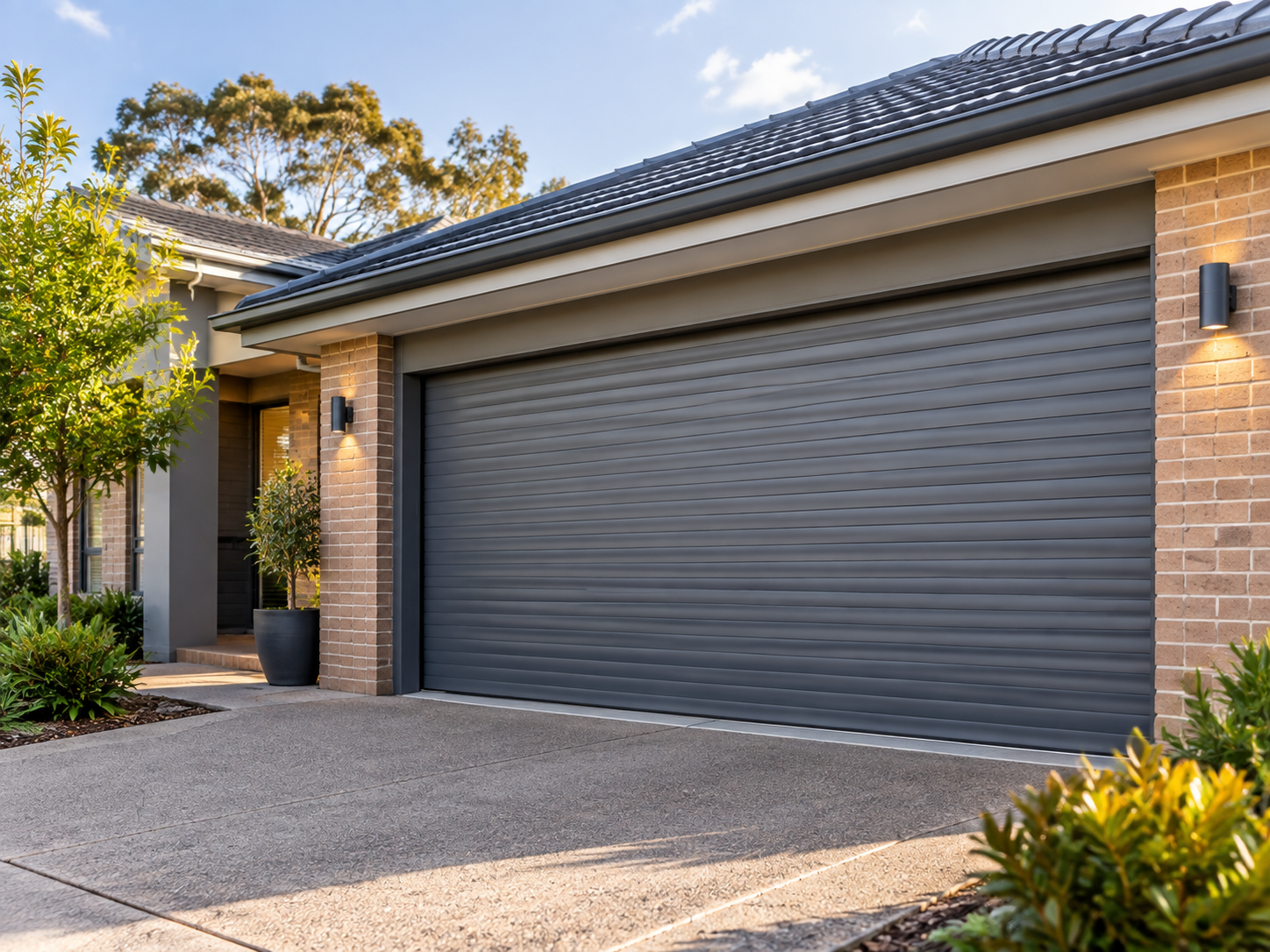
Insulated roller doors control temperature, block drafts and cut outside noise. You will notice the difference within a day, especially if your garage doubles as a workshop or a home gym.
Yet most Australian garages bake through summer afternoons and turn icy by July. A single skin of steel holds almost no heat. At The Not Vanilla, we hear that same complaint from Melbourne homeowners nearly every week of the year.
This guide walks through how the insulation works, which design and colour choices suit your home, and what a quote covers. Let’s get into it.
Why Do Insulated Roller Doors Make Your Garage More Comfortable?
An insulated roller door makes your garage comfortable by blocking heat, cold and drafts. Foam panels sit between your car and the weather, so the space starts behaving like a room instead of a shed.

Three things happen once that barrier goes up. Each one changes how the space feels day to day.
How A Foam Panelling System Slows Heat Transfer
A foam panelling system slows heat transfer because the foam core sits between two steel skins. That core cuts the transfer of heat from outside in.
Thicker foam means more thermal resistance, so a 20 mm core holds the line better than a thin one. In practice, a west-facing garage stays several degrees cooler through a 35 degree afternoon (we’ve measured this on install days).
Excellent thermal insulation also protects what you store in there, from paint tins to a second fridge that no longer works overtime.
Why Do Sealed Garage Doors Cut Drafts and Reduce Noise?
Sealed garage doors cut drafts because brush seals and a rubber bottom strip close the gaps. Outside air used to push straight through those gaps.
Those seals also stop dust and leaf litter blowing in off the footpath. Here is the thing. Sealing helps reduce noise at the same time, so traffic and mowers no longer carry into the house.
Keeping Internal Temperature Steady All Year
A steady internal temperature counts most when the garage doubles as a study, gym or workshop. Swings of 15 degrees make a room unusable.
Good garage insulation holds that line both ways. Winter warmth stays in, summer heat stays out, and the heater does not run all day. Less heat loss in July is the part people notice first.
Honestly, one client told us their converted garage finally stayed usable in February (that was a 38 degree week).

Design, Colour and Insulation Options for Residential Garage Doors
With comfort sorted, looks come next. Matching the design to your home lifts kerb appeal and keeps the insulation benefits intact. Colour, profile and finish all sit on top of the same panel build, so nothing gets traded away.
Work through the three choices below before you lock in a final look.
- Colour Range: Powder-coated finishes on BlueScope steel cover more than 20 standard colours, so you can match gutters, window frames or a front door without guessing.
- Profile and Design: Flat slats keep a modern home clean-lined, while a wider ribbed profile suits older brick houses far better.
- Door Type Options: Rollers win on ceiling space. For a flatter face to the street, a Sectional Garage Door also brings finger protection technology, which suits homes with small kids.
Bring a photo of your house front to the measure-up, because colour reads differently in daylight than it does on a chart. That one step saves most people a second round of samples.
Energy Efficient Garage Doors Lower Your Energy Costs
Beyond comfort and looks, there is the money side. An uninsulated door leaks conditioned air out of the roughly 36 square metres of a double garage, and that hits you in the hip pocket.
The Australian Government’s Your Home guide puts the wider saving at up to 45 per cent of heating and cooling energy once a home is properly insulated.
Superior thermal performance does more than settle the garage itself. Homes with an internal access door often notice a cooler hallway and a quieter laundry once new panels go in.

Bottom line: energy savings arrive in small amounts, not one dramatic drop on a single bill. Home Improvements like this behave the way wall insulation does, steady and easiest to see across a full summer of cooling costs.
For example, we’ve fitted roller garage doors with a 20 mm foam core under an upstairs bedroom, and the change upstairs surprised people most (they expected nothing above the garage).
Getting a Quote and Booking a Service Visit
Once you’ve settled on a look and a budget, one step remains. Requesting a quote takes minutes and gives you exact pricing for your opening.
| Step | What happens | Timing |
|---|---|---|
| Free quote | Send your opening width and height online | Same day reply |
| Site measure | We check headroom, power and garage door openers | Within 3 days |
| Book service | Lock in your install or repair date | 1 to 2 weeks |
Keep your measurements handy, since that detail decides whether a roller or a sectional fits your headroom. Our range covers residential doors and commercial doors, so you are never stuck with one option.
Ready for a More Comfortable Garage All Year Round
It comes down to one decision: whether the door between you and the weather holds heat or lets it straight through. Insulated roller doors settle that question for the working life of the door.
Book a measure-up this week and have a quieter, steadier garage before the next heatwave arrives. Getting sizes checked early also buys peace of mind on install day.
The Not Vanilla supplies and installs insulated roller doors for homes across Melbourne. Contact us today to book your measure and get a fixed price in writing.