
Custom insulated doors cut energy waste by sealing heat out in summer and keeping warmth in during winter. A poorly fitted garage door is often where that waste begins. And yet, it’s one of the most overlooked problems in Australian homes.
A poorly fitted door forces your air conditioning to overwork. Even at full blast, your home struggles to hold a comfortable temperature. That’s a problem we’ve helped hundreds of Queensland homeowners fix, and the fix starts with a correctly sized, well-insulated door.
In this article, we’ll cover how door sizing, insulation, and proper fit work together to lower your energy bills. By the end, you’ll know where your home is losing energy and how to fix it.
Let’s get into it.
Why Off-the-Shelf Garage Doors Push Your Energy Bills Higher

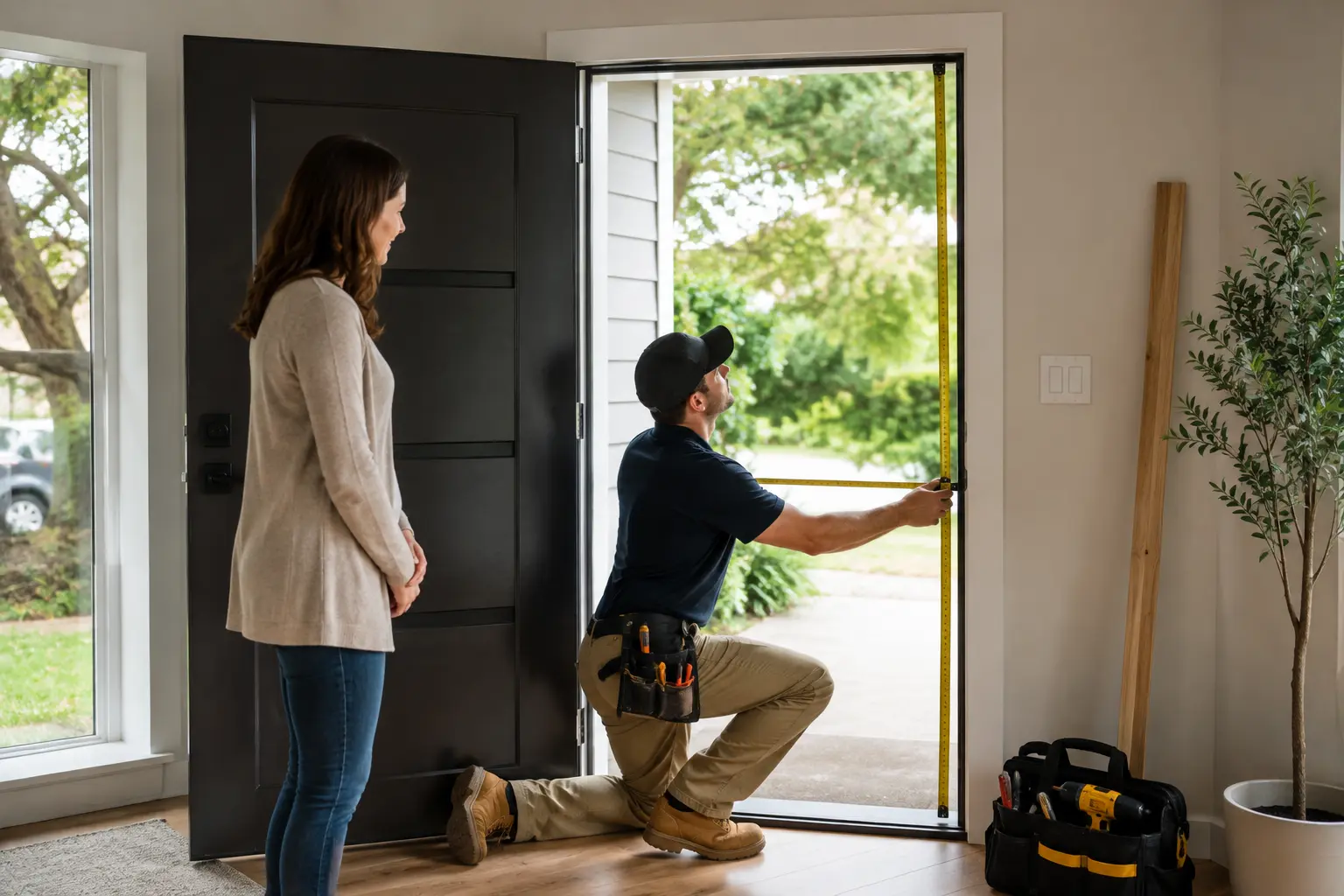
The issue is simple: standard garage doors are manufactured in fixed sizes, such as single, double, and triple panel widths, but your home’s opening has its own exact dimensions. Those two things rarely line up, and that’s why off-the-shelf garage doors inflate your bills.
The jacket’s there, but it isn’t doing much. Your garage door does the same thing, looking the part while warm air slips through the edges anyway.
That poor fit shows up on your power bill in three ways:
- Gaps Let Warm Air in: Air constantly moves through the edges of the door frame. Because of that, your heating and cooling systems work harder to compensate, and that extra strain pushes your energy bills up.
- Heat Builds in Your Garage: An unsealed garage traps heat during summer. In Queensland’s summer, that trapped heat can reach extreme levels. It then bleeds through shared walls into your living spaces, so your cooling system never truly gets a break.
- Cold Air Seeps in Overnight: A poorly fitted door lets cold air in through the frame all night. By morning, your heating system has already burned through extra energy just to bring the temperature back up.
The only way to stop air moving through those gaps is a door built to your exact opening size. Once that’s sorted, your heating and cooling systems work far more efficiently.
The Real Cost of a Poor Door Fit in Australian Homes

A lot of Australian homeowners blame their appliances when energy bills climb. But more often than not, the existing door is the problem, because a poor fit lets air move freely in and out all day.
What makes it worse is the compounding effect. Your heating and cooling systems pick up the slack, running longer cycles to chase a temperature they can never quite hold. That’s hours of unnecessary runtime every single day, and it shows up directly on your quarterly power bill.
And the longer that goes on, the worse it gets. Australian households already spend an average of $2,000 a year on energy bills, and heating and cooling account for around 40% of that. A poorly fitted door pushes both figures higher, and most homeowners never connect the two until the bills become impossible to ignore.
Seal Quality and Installation: What Your Door Relies on?
Insulated door systems vary a lot in quality. The materials used, how well the seals are fitted, and the quality of the installation all affect how much energy your door saves you year-round.
Seal quality and installation carry the most weight out of those three factors:
How Tight Seals Block Air Transfer
High-quality insulated door systems use aluminium components and engineered seals to block outside air.
According to YourHome’s insulation standards, frame sealing and insulation core quality carry equal weight for energy efficiency. These seals sit flush against the frame, keeping dust, cold drafts, and outside air from passing through.
And without the right seal quality, even the best panel material won’t hold your indoor temperature.
Long-Term Professional Installation
Alongside seal quality, professional installation is what locks in your door’s long-term energy performance. From our firsthand examination of poorly installed systems, the frame gap is where energy loss starts every single time.
Ultimately, a rushed installation shortens your door’s effective lifespan and costs you more in the long run.
How Customised Insulated Doors Keep the Heat Out (and the Cool In)
Tailored insulated doors keep your indoor temperature stable without overworking your air conditioning. Unlike standard doors, they’re designed specifically to stop outside air from passing through.
It works across three specific areas: Insulation, airflow, and energy efficiency.
- Built to Insulate Properly: Custom doors use insulated panels that block heat transfer directly. So your energy costs drop noticeably within the first billing cycle.
- Seals That Control Airflow: A Brisbane home with a poorly sealed door loses up to 25% of its conditioned air through frame gaps. Custom-fitted seals close those gaps off, so your cooling system holds the temperature you set.
- Energy Efficient Year-Round: A well-insulated door reduces your heating and cooling system’s runtime noticeably. For Australian homeowners, that translates into hundreds of dollars saved on energy bills across a full year.
A door built to your exact measurements holds indoor temperature consistently because there are no weak points for outside air to exploit. And your energy bills reflect that precision every single month.
The Year-Round Payoff of Getting Your Door Right

Australian homeowners who’ve switched to insulated doors notice the payoff on their energy bills, in their air quality, and through their walls.
Of those three, the energy bill impact tends to hit home first. After helping Queensland homeowners install customised insulated doors, the feedback we hear most is: the power bill drop catches them off guard.
The savings extend well beyond the first power bill. Over a full year, Australian households with properly fitted insulated doors typically save hundreds of dollars in heating and cooling costs alone.
Insulated doors also improve indoor air quality by blocking dust and outside air at the frame. In short, properly sealed door openings reduce your home’s overall heating and cooling load, and your energy bills reflect that across every season.
A Better-Fitted Door Starts Paying You Back Instantly
By now, you can see that a poorly fitted garage door undoes a lot of your home’s hard work. Weak seals, poor insulation, and an imprecise fit all push your energy bills up, and insulated doors tackle all three.
In this guide, we’ve covered why standard doors push energy bills higher and what goes into a high-performance insulated door system. The year-round energy savings follow naturally from getting both of those things right.
All that’s left to do is act on it. The Not Vanilla has seen every door problem in the book and knows how to fix yours. Our team will measure your opening, match the right insulated door to your home, and get it fitted properly.