
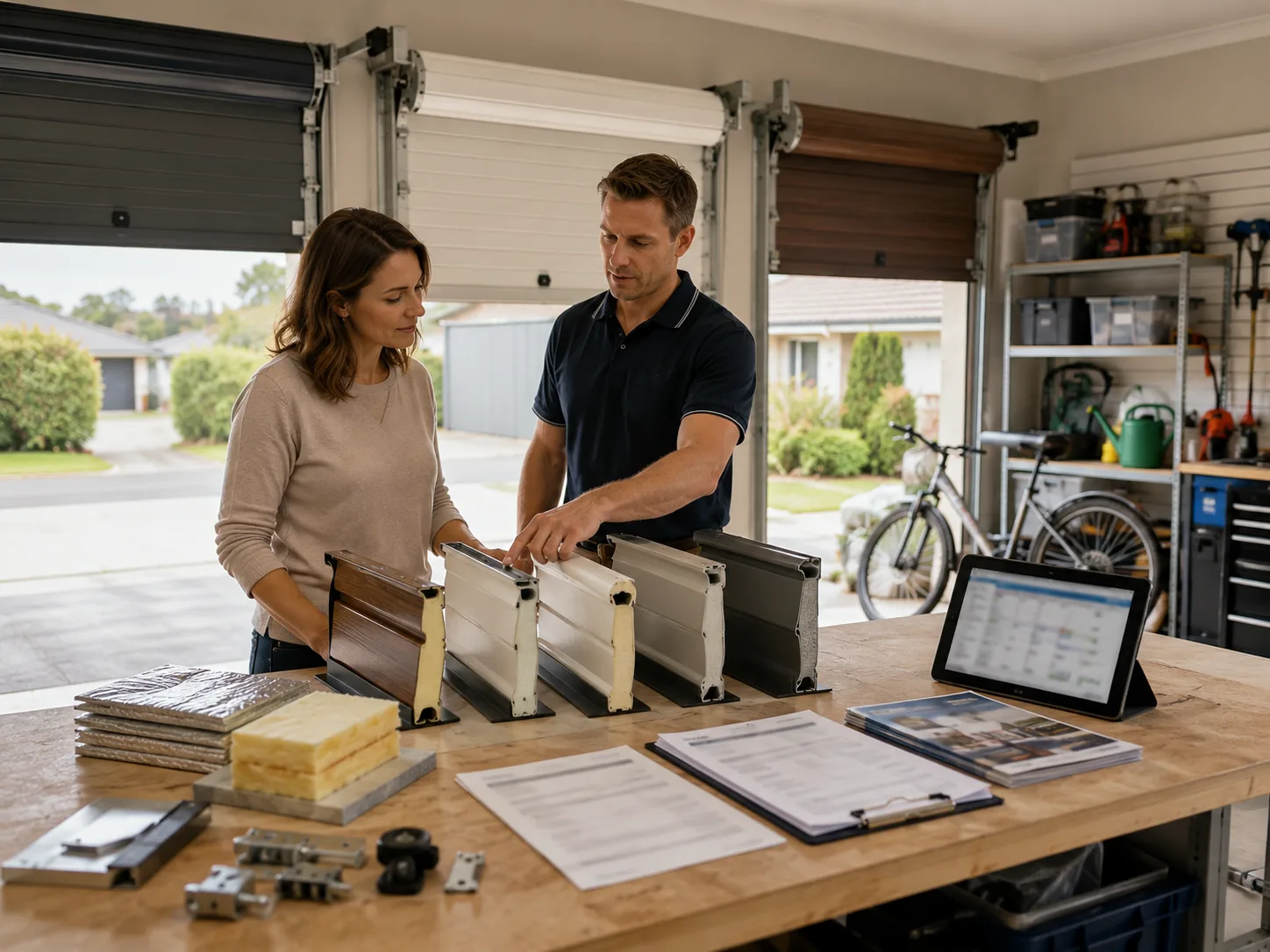
Most property owners spend a lot of time picking the right colour or style for their new door. But the specs underneath all that? Those get skipped far too often. As a Roller Door Manufacturer, we see it happen constantly across Queensland garages.
Choosing roller doors comes down to three things: insulation ratings, security features, and long-term maintenance costs. If you get those right, you’ll have a door that performs well for years. But if you miss them, you’ll be looking at higher energy bills and unexpected repair costs down the track.
This article covers insulation materials, R-values, fire safety, and commercial door options. You’ll know exactly what to check before you commit to anything. Let’s start with the numbers.
Insulation Ratings: What the Numbers Actually Tell You
Your door’s R-value is the single most useful number to check when comparing insulation performance. It measures how well the door resists heat flow, and the higher the number, the better it keeps your garage cooler in summer and warmer in winter.
Worth knowing: The Australian Government’s YourHome guide explains how material R-values work across different building assemblies.

However, for Queensland’s climate, a residential roller door should meet a minimum R-value of 1.5. Anything below that and you’ll feel the change pretty quickly, especially in peak summer. Unfortunately, most standard steel doors without insulation sit at R-0, which means zero thermal resistance.
That distinction between an uninsulated and an insulated door is very clear in energy use. So checking the R-value before you buy is genuinely one of the smartest moves you can make on day one.
The Real Difference Between Insulation Materials
Not all insulated doors perform equally, and the quality gap tends to be the true distinction maker in choice. Browse our extensive range of Roller Doors to see how insulation options vary across our door types.
Three areas are worth understanding before you make any decisions. Let’s walk through each one.
Bulk Insulation and How It Works
The best part about bulk insulation is that it works passively, with no moving parts and no running costs. It traps air pockets inside the door panel, and those pockets act as a buffer that slows heat transfer between your garage and the outside.
The most widely used insulation material in roller door panels is polyurethane foam board. It’s injected directly into the panel during manufacturing, which leaves no gaps for heat to pass through.
Fibreglass batts are another option, though foam board tends to outperform them in thinner door profiles. It holds its shape better over time and handles Queensland’s humidity without breaking down.
Air Gap vs. Thermal Bridging: Which One Wins?
Now that you know how bulk insulation works, it’s worth understanding what air gaps and thermal bridging actually do. An air space between door layers adds a passive thermal barrier at no extra material cost.
Some doors also include a foil layer bonded to reflective surfaces inside the panel. That foil bounces radiant heat back toward the outside rather than letting it absorb into the door material.

That said, air gaps alone don’t solve the problem. Thermal bridging happens when the steel frame or tracks conduct heat straight into your garage, bypassing the insulation entirely. Air leakage around the door edges compounds the issue. But a well-sealed door addresses both problems at once.
Thermal Performance You Can Measure
Thermal performance covers three separate factors: R-value, air gap, and material conductivity. A door’s total performance rating combines all three, which means a single R-value figure won’t give you the complete picture.
Condensation risk is another thing worth checking. Poor thermal performance leads to moisture build-up inside the panel over time. In turn, that opens the door to mould and structural damage you didn’t budget for.
So always ask your supplier to quote R-values for the full door assembly. Panel thickness and insulation depth both influence this outcome. That’s precisely why getting those figures in writing before you commit is worth the extra five minutes.
Choosing Roller Doors for Security, Not Just Style
A door that looks great but fails on security is a liability, not an upgrade. Unfortunately, most people focus on the finish and forget to ask about the construction behind it. Here’s what to look at before you sign off on anything:
- Steel Gauge Thickness: For residential roller doors, a minimum of 0.5mm steel is standard, though 0.8mm or above offers noticeably better resistance to forced entry. A thicker gauge is harder to push through, bend, or lever open from outside.
- Internally Mounted Locking Bars: These are locks fitted inside the door track, sitting completely out of reach from outside. They’re far harder to tamper with than external padlock points (which are surprisingly easy to cut through).
- Powder-Coated Finish: A polyester powder-coat finish, baked on at high heat, bonds directly to the steel surface and resists chipping, fading, and corrosion. In coastal Queensland suburbs like Redcliffe or Sandgate, where salt air is a constant, that protection is worth every cent.
On top of security, a well-constructed door holds its value better over time. So when you’re comparing options, look past the colour chart and dig into the specs.
Fire Safety and Commercial Door Options Worth Knowing
Fire-rated roller doors do more than tick a compliance box. In a genuine emergency, they buy essential time for evacuation and limit the spread of fire between sections of a building.
Under the AS1905.1 standard, every fire door assembly in Australia must be tested and certified as a complete unit. It should cover the door leaf, frame, hardware, and seals together, assessed as one system rather than individual parts.
For commercial and industrial buildings in Queensland, fire-rated doors are compulsory in many applications under the NCC compliance framework. The National Construction Code (NCC) sets out exactly where fire separation is required and what performance level each installation must achieve.
On that note, a fire door’s rating tells you how long it resists flame and heat before failing, which is the number worth asking about upfront.
Pro Tip: Commercial door options vary widely across ratings, materials, and configurations. Always verify your building’s specific requirements with a licensed certifier before purchasing.
Long-Term Maintenance: The Costs Most Owners Don’t See Coming
The purchase price is the easy part. It’s the ongoing costs that tend to surprise people, particularly once the warranty period runs out. Before you finalise any property upgrade, here’s what to factor in:

- Springs and Cables: These wear out faster without regular lubrication, especially in cold or moisture-heavy garages. You should budget for replacement every five to seven years as best practice.
- Bottom Seals and Side Tracks: Worn seals raise your condensation risk and let moisture into the floor insulation. You’ll spend far less replacing them early than dealing with mould later.
- Motor and Panel Condition: Don’t ignore minor squeaks or slow operation on your door. A yearly professional service check keeps small steel panel issues from turning into full renovation costs.
On the whole, a well-maintained insulated door holds its performance across years of daily use. The money you save on heating alone makes that annual service very easy to justify.
Before You Sign Off on That Door
You’ve now got a clear picture of what separates a solid door choice from a costly one. Insulation ratings, fire compliance, and maintenance costs all deserve your attention before you commit to anything.
A well-insulated, properly installed door cuts your energy bills and protects your garage against Queensland’s heat, humidity, and coastal conditions. This way, your space stays cooler in summer, and your heating costs drop through winter. That’s the kind of confidence a well-chosen door gives you.
When you’re ready to move forward, contact us at The Not Vanilla. Our team will walk you through every option, spec, and insulated guide you need to make the right call.