
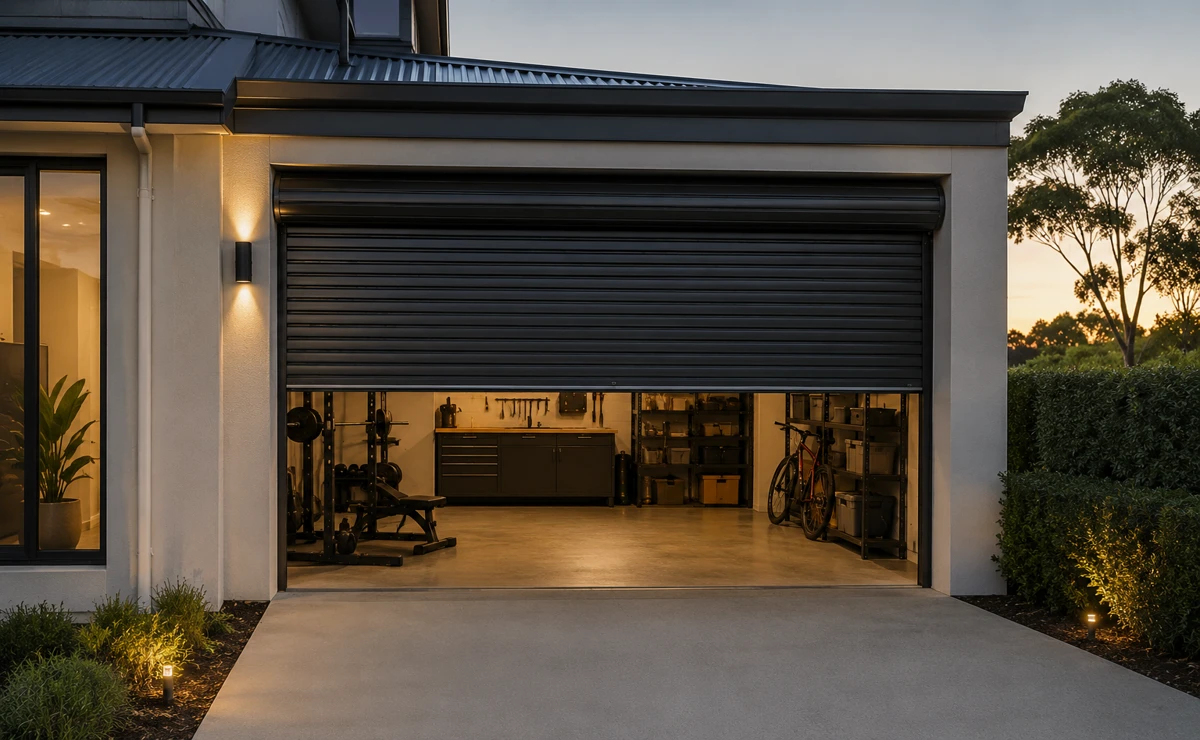
Insulated roller doors have long been standard in warehouses and commercial buildings across Australia. Nowadays, more homeowners are installing them on residential garages too.
If you’ve ever walked into your garage mid-summer and felt like you’d opened an oven, you know it’s a problem. That’s what an uninsulated roller door does to your space.
So what’s this article about? It covers how insulated rolling doors work, why they’re catching on beyond industrial buildings, and how they compare to standard options. By the end, you’ll have a clear picture of whether an upgrade makes sense for your home.
Your garage deserves the same comfort as the rest of your house. Read on to find out what a thermal roller door can do for your energy efficiency, your comfort, and your wallet.
What Makes Insulated Roller Doors Different From Standard Ones?

An insulated roller door has a foam core sandwiched between two layers of steel, while a standard one’s just a single skin with nothing inside. That single difference changes how the door performs across every season.
Insulated doors pull ahead of standard ones for two reasons: a built-in thermal layer and the energy efficiency that comes with it. Let’s walk through both.
1. How the Thermal Layer Works
The thermal layer in an insulated roller door is a foam core, usually polyurethane or polystyrene, which sits between two steel skins on the door curtain profile. Think of it like the wall insulation inside your home. Same principle, just built into your door.
That foam material blocks heat from passing straight through the door surface. The air space created by the foam layer slows down heat transfer significantly. In this case, the thicker the core, the better the insulation rating and year-round temperature regulation.
2. Built-In Energy Efficiency You Can Feel
Good insulation keeps the cold out, and it keeps your energy costs down too. That’s where thermal roller doors deliver a real advantage over standard options.
The best part? Your garage stays warm in winter and cool in summer without running extra heating or cooling. That’s a direct win for your energy efficiency and your heating bills.
From our experience, the difference on a forty-degree Brisbane day is impossible to miss. That saving builds up over five to ten years, especially if your garage sits right next to your living areas.
It’s the combination of thermal protection and cost-saving set that separates an insulated roller door from a basic single-skin option.
So Why Are Homeowners Choosing Them Now?

Ten years ago, nobody thought twice about what type of roller door sat on their garage. It’s one of the first things homeowners ask about during a renovation.
Energy costs across Australia have increased over the past few years, and homeowners are struggling with the rising power bills and cost of living. The garage door is usually one of the last things to get attention. But that’s starting to change.
Garages now double as home gyms, workshops, and home offices across the country. As for comfort, installing an insulated garage door means you can use that space year-round without sweating through summer or freezing through winter.
In fact, builders and renovators in Queensland recommend insulated garage roller doors as one of the simplest upgrades with a noticeable return. The shift is noticeable right across Queensland.
Insulated vs Standard Roller Doors: A Quick Side-by-Side
Now that you know what’s inside an insulated roller door, let’s compare it against a standard one across five areas: insulation, energy efficiency, noise, durability, and weather protection.
|
Feature |
Insulated Roller Door |
Standard Roller Door |
|---|---|---|
|
Insulation Rating |
High (foam core) |
None (single skin) |
|
Energy Efficiency |
Efficient year-round |
No thermal performance |
|
Noise Reduction |
Significantly reduced |
Minimal |
|
Durability |
More durable, sealed perimeter |
Basic, less protected |
|
Colour & Style Options |
Wide range available |
Limited options |
|
Weather Protection |
Sealed against rain, dust, cold |
Minimal protection |
|
Installed Correctly |
Requires a professional installer |
Standard installation |
A standard garage roller door costs less upfront, but it offers zero protection against outside air, dust, and heat. That’s a performance gap for any attached garage.
In return, insulated roller doors offer long-term savings. Insulated roller doors are priced higher. Based on our experience, most owners recover the cost difference through lower power bills within two to three years. When you factor in the comfort, the style options, and the durability of insulated products, the value becomes clear pretty quickly.
Can a Garage Door Upgrade Improve Your Home’s Thermal Performance?

Swapping out your garage door for an insulated one can lower the temperature inside your garage by several degrees during an Australian summer. That’s a big deal, especially if your garage shares a wall with your kitchen or living room.
So where does all that heat go, and what can you do about it? Let’s look at the two spots that tell the whole story: how your door pairs with your wall insulation, and where heat actually sneaks out.
1. How It Pairs With Your Wall Insulation
Insulated garage door installation works best when it’s part of a larger picture. Wall insulation covers the structure, but without an insulated door, heat still pours through that large opening every single day.
Together, they create a sealed thermal envelope that keeps conditioned air inside where it belongs. Consider your garage as a thermos. The wall insulation is the outer shell, but without a proper lid, the heat escapes anyway. And your garage door is that lid.
This pairing is standard in newer Australian builds. It’s also a popular retrofit for older homes across the suburbs, especially when upgrading to energy-efficient insulated roller doors for homes.
Pro Tip: If you’re already upgrading your wall insulation, swap the garage door at the same time. Doing both at once saves on installer costs and gives you a complete thermal barrier.
2. Where Most Heat Escapes and How to Stop It
People in general focus on the door itself, but the gaps around it are just as important. The garage door surface, side tracks, and bottom rail seal are the three major weak points for heat loss in any garage.
Worn seals and gaps around the door frame let outside air, dust, rain, and smoke in. They flow straight into the garage with little resistance. You’d be surprised to know that around 30% to 40% of heating and cooling loss happens through a worn bottom seal.
Replacing an old roller door with an insulated one and fresh seals fixes the most common problem areas in one go. One garage door swap paired with decent wall insulation can cut heat loss through that space by a noticeable amount.
That covers the two major heat loss problems in any residential garage. Sort both, and your thermal performance will improve across every season.
Is the Switch Worth It for a Garage Roller Door?

Many consumers don’t think of their garage door as something that affects their electricity bill. But it does, and you’ll feel it the moment that first power bill arrives after installation.
The initial cost of an insulated garage roller door is higher than a standard one, sure. However, most homeowners notice lower energy bills within the first twelve months. That return comes soon from a single home upgrade.
And here’s the thing: an insulated garage door also lifts your property’s resale value and street appeal. Our tests revealed that buyers across Australian suburbs respond well to a modern, insulated garage door installation. It’s a small commitment with a long-term advantage for your home.
For anyone who uses their garage as a liveable space, a good professional installer can deliver a result that protects your investment for years. And honestly, once you’ve lived with an insulated garage roller door through a full Australian summer, a standard door just won’t cut it anymore.
Quick Tip: Get at least two quotes before agreeing to a garage door installation. Prices vary across Queensland, and a good installer will explain your insulation options before you commit.
Ready to Rethink Your Roller Door?
Insulated roller doors belong in homes just as much as they do in warehouses and factories across Australia. And with the right team, installation is simple and hassle-free.
If your garage feels like an oven in summer or a freezer in winter, the door’s the first thing to fix. The Not Vanilla can walk you through insulation ratings, colour choices, and everything in between, and we’ll make sure you get the right fit for your home.
No pressure, but we’d love to help. Reach out to our team today for a quote on insulated roller door installation across Queensland. We’re here whenever you’re ready.
We suggest taking a quick look at your current garage door seals before you call. If they’re cracked or worn, mention it when you get in touch. It helps us deliver the right insulation solution for your space from the very first visit.