
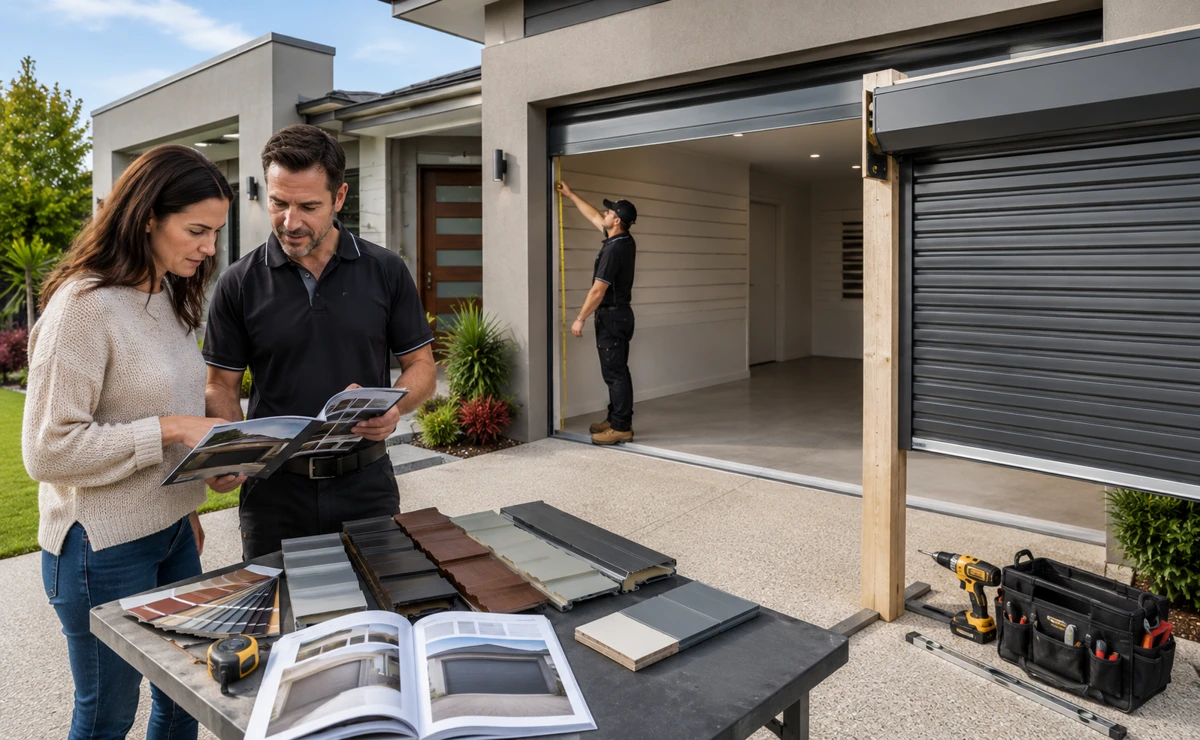
Before installing a roller door, you need to get three things right: the size, the material, and the type of door that suits how you use your property. Most homeowners skip these checks entirely before buying a garage door. They go straight to colour or price, and end up with a door that doesn’t fit the opening or doesn’t suit the garage at all.
Fortunately, this roller door installation guide covers everything worth checking before you make an informed choice. So you move forward with confidence and avoid the common mistakes.
Getting the Size Right for a Perfect Fit

Many people don’t double-check measurements, especially in renovations where the opening has been modified. Even a small error in width or height can mean the garage door doesn’t fit, or the mechanism doesn’t have enough room to operate.
Even though standard sizes exist, plenty of older Australian homes need custom measurements. Things like headroom above the opening and side clearance inside the garage both affect which roller door fits and how well it rolls.
Now, aside from the fitting, you also need to check out the materials (especially if you’re living with Brisbane’s weather conditions).
Roller Door Materials: What Works for Your Property?

As mentioned before, most homeowners choose a material based on looks alone (and that’s often where the regret starts).
The material you choose affects how durable your doors are, how much maintenance they need, and how well they hold up against the weather. It also changes how your home looks from the street, which is reason enough to think it through properly.
Let’s break down the main material options and see which one suits your property best.
Steel and Aluminium Roller Doors
Steel and aluminium are the two most practical choices for Australian roller doors. It is the only door material that can provide a fire rating of up to three hours. Besides, these doors are heavier and more secure, which makes them a good pick for high-traffic garages or anywhere security is a priority.
On the other hand, aluminium is lighter and handles rust well. It works particularly well in coastal areas like Brisbane or the Gold Coast, where salt air is a constant factor.
Both materials are reliable and come in a range of modern styles. Though insulation options vary depending on the profile you choose, it’s worth checking that when you’re comparing doors.
Timber-Look and Colorbond Finishes
If steel and aluminium cover the structural side, timber-look and Colorbond finishes cover the visual one.
Timber doors give you that classic, warm aesthetic without the warping and upkeep that comes with wood. They’re popular on heritage streets and older suburb renovations, such as inner Brisbane or parts of Adelaide.
On the other side, Colorbond finishes are tough, fade-resistant, and come in a wide range of colours that complement most Australian home exteriors. Together, they prove that a garage door can pull its weight aesthetically just as much as it does structurally.
Different Types of Roller Doors and How They’re Used

Not every roller door works the same way, and picking the wrong type for your property is an easy mistake to make. Take a look at the main door types worth knowing before you decide:
- Roller Doors: These roll up into a compact box above the opening, which makes them a popular pick for garages with limited overhead space. They’re available as manual or automatic and suit a wide range of garage sizes.
- Sectional Doors: If insulation, security, and a clean, modern look are high on your priority list, sectional doors are often worth considering. Made up of multiple panels that move vertically, they sit neatly against the ceiling when open and are especially useful where side clearance is limited.
- Tilt Doors: Simple in design and often cost-effective, tilt doors open as a single panel. Because the door swings outward before lifting, they’re best suited to homes with enough driveway space to accommodate the opening arc.
- Sliding Doors: The sliding doors run along a track parallel to the garage wall. They’re particularly useful in garages where ceiling space is needed for storage, lighting, or other overhead fixtures.
Each door type fits different needs, so check your garage layout and how often you’ll use it before deciding.
Free Measure First and Why It’s Important
A free measure can save you from ordering the wrong door, and that costs quite a bit. We’ve seen doors ordered without a proper measure end up sitting in someone’s garage for weeks because the opening was 40mm too narrow (takes about 20 minutes, saves a lot of frustration later).
A professional measurement confirms the exact dimensions of your opening and picks up any clearance issues before anything gets ordered. This helps ensure the installation process runs smoothly from the start. Delays during installation are often caused by mismatched hardware or incorrect sizing, and both are easy to avoid.
Most reputable roller door suppliers across Australia offer a free measure before you commit to anything. It’s the one part of the process you shouldn’t leave out.
Your New Garage Door and the Range of Options Available

A new garage door gives you many options to choose from. With more styles, finishes, and features available today, it’s easier than ever to find one that fits your home and your needs. Run your eye over what the full range covers:
- Security and Insulation: Doors now come with built-in insulation and reinforced locking options as standard across most of the range. These features keep your garage comfortable and your home secure year-round.
- Garage Door Openers and Automation: Smart garage door opener options are now widely available, including models from brands like Nice, Genie, and Somfy. These systems connect to your home Wi-Fi and allow you to monitor and control your door remotely from your phone, set schedules, and receive real-time alerts.
- Windows, Colours and Accessories: Most doors in the comprehensive range come with optional windows, a wide selection of colours, and add-on accessories to suit your budget. It’s worth reviewing the full range before you decide. The price gap is often small, especially with added features.
Review the range beforehand. This helps you ask the right questions and avoid choosing a door that only partly suits your needs. If you’re comparing options, start by looking at the difference between roller doors and garage doors to guide your decision.
Front Door vs. Garage Door: What Sets Them Apart?
Many homeowners want their front door and garage door to look good together. So they plan exterior upgrades with matching styles to create a cohesive look.
However, these doors serve different purposes and have different needs for design, security, insulation, and durability. These differences can help you make smarter choices as you update your home’s exterior.
Check at the table below how the two differ:
|
|
Front Door |
Garage Door |
|---|---|---|
|
Primary Role |
Entry and aesthetics |
Vehicle access and storage security |
|
Material Needs |
Timber, steel, fibreglass |
Steel, aluminium, Colorbond |
|
Security Level |
Standard residential locks |
Reinforced locking, higher wind ratings |
|
Maintenance |
Low to moderate |
Low, less maintenance overall |
|
Insulation |
Moderate |
Higher insulation options available |
Your front door and your garage door face completely different demands. The garage door takes more weather exposure, needs stronger locking mechanisms, and generally requires more robust materials to stay secure and operational over time.
Replacing an existing garage door also involves different considerations compared to swapping out a front door. Choosing the right door for each entry point means your family stays safe, your car stays protected, and both doors hold up well for years.
Ready to Get Started? Here’s Your Next Move
Now that you know what size, material, and door type suits your property, the next step is getting someone out to measure up and walk you through your options in person. Our team at The Not Vanilla provide flexibility and a comprehensive customer service.
Before you call, it helps to have a few things sorted in your head:
- Your garage dimensions, or a rough idea of the opening size
- How often the door gets used daily
- Choose between your need- automation or a manual door
- Your budget range, even a loose one
If you have those details ready, your consultation runs more smoothly. You’ll walk away with a clearer picture and a shorter list of questions. Our customers find that even a short conversation saves them a lot of back-and-forth later.