
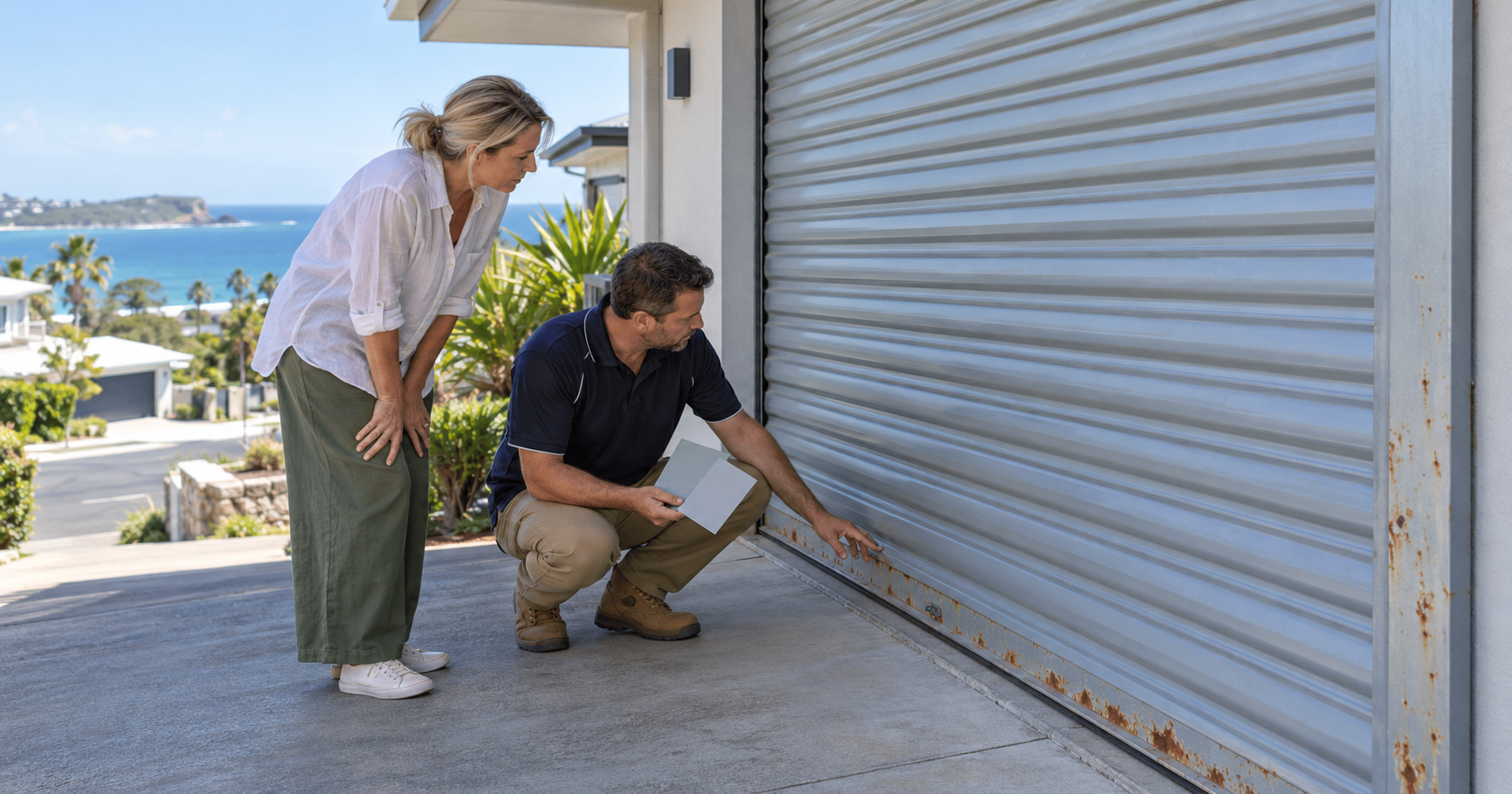
Living near the water speeds up wear on a lot of things, and your garage door is no exception. Salty air corrodes metal fast. It wears down coatings and shortens the life of standard steel.
Salt damage is avoidable. Corrosion-resistant roller doors handle salt exposure properly, provided you know which materials and coatings hold up.
We’re The Not Vanilla, and we fit and repair roller doors across coastal Queensland every week. We’ve seen homeowners near the water replace a standard door after only a couple of years, well short of what it should last.
This guide covers the materials worth paying for, the coatings that hold up, and the cleaning habits that keep rust from creeping in.
Why Salt Air Damages Garage Doors
Salt air causes new garage doors to rust faster because salt particles cling to metal surfaces and pull in oxygen at a much faster rate. Salt and oxygen together are what start corrosion. Plain moisture alone doesn’t do nearly as much damage.
Homes in coastal areas face faster corrosion constantly, especially when onshore winds carry salt further inland. A well-built door can develop rust spots within months if it sits unprotected in these conditions.
Standards Australia grades coastal corrosion risk by location. AS/NZS 2312.1 classifies coastal environments by their atmospheric corrosivity. So, properties close to the water fall into higher Australian atmospheric corrosivity categories than inland homes. That’s why identical steel can behave so differently depending on local conditions.

Standard Steel Doors vs Coastal Garage Doors
We’ve fitted enough doors around Redcliffe to know standard steel rarely makes it past the two-year mark out here. A two-year rust formation timeline is fast for something meant to last a decade, so getting the material right from the start avoids an expensive redo.
Skimping on materials now is a false economy once the rust sets in. Here’s how the main options compare for coastal use:
| Material | Rust Resistance | Best For |
| Marine Grade Aluminium | Resists rust almost entirely, even with constant salt exposure | Costs more upfront but rarely needs replacing |
| Coated Grade 316 Stainless | Excellent corrosion resistance within five kilometres of the surf | Holds up for years with only fortnightly washing |
| Standard Steel | Shows surface rust within months near the water | Inland properties, unsuitable for coastal climate |
Choosing the right garage door components now determines whether you’re replacing this door in two years or fifteen. Grade 316 stainless is a good choice for durability near the surf.
The Coating Decides How Long Your Door Actually Lasts in Coastal Environments
Once you’ve picked a material, coating decides how long your roller door holds up. A good coating works like a raincoat. It stands between the metal components and everything the weather throws at your door.
At The Not Vanilla, we fit protective coatings built specifically for salt exposure rather than everyday weather. COLORBOND uses coated steel in roller door curtains as well as roofing. Their advice on maintaining coated steel near the coast points to regular freshwater washing as the simplest way to protect it.
COLORBOND’s advice applies to roller doors just as much as roofing. A solid finish stops rust, but that’s not the only job it does. Coatings seal the metal surface so salt particles can’t settle in and start corrosion early. They also resist scratches from wind-blown sand, and any damage that does occur tends to stay small and easy to fix.
Hinges, tracks, and springs benefit too, since a good coating extends past the main panel to cover moving parts and cuts down on repainting later. Cleaning habits count just as much as coating choice, which brings us to your washing routine.

Garage Door Rust: What Regular Cleaning Prevents
Regular cleaning keeps garage door rust away by removing salt residue before it settles into joints and hardware. Salt build-up happens fast near the coast, particularly after strong onshore winds.
Cleaning is the kind of job that gets pushed to next weekend and forgotten about completely. Small salt deposits turn into rust spots, and a cheap fix becomes a costly one fast.
Fortnightly washes are what we recommend for anything within five kilometres of the water. Doors on that schedule show less rust when we’re called out for servicing, and ASSDA’s research on coastal corrosion backs the same frequency.
Regular rinsing is what stops tea staining, a rust-like discolouration that shows up on stainless steel within five kilometres of the surf. That’s one more reason ASSDA recommends grade 316 stainless for properties this close to the water.
A proper wash only takes a few steps:
- Rinse With Fresh Water: Spray down the entire door to remove sand, grime, and road salt before it dries in place. This step alone stops most build-up from ever becoming a problem.
- Use Mild Detergent: A light soap cuts through residue that plain water leaves behind, especially in tracks. Focus on hinges and joints where salt tends to collect.
- Dry the Surface: Wipe the door down afterwards so water doesn’t sit in seams. A dry surface also makes new salt easier to spot next time.
Cleaning helps most on residential properties near the water, though salt can travel well inland on strong winds. It slows corrosion but won’t stop it completely, so a few extra checks are still worth doing.
What Else Protects Your Door From Rust?
Cleaning covers the surface, but hinges, rollers, and tracks need their own attention since they’re the parts you can’t see from the driveway. These moving parts wear down faster in salty air, even on a door that’s washed regularly.
A small rust spot is like a chip in your windscreen. Ignore it, and it spreads until you’re paying for a full replacement. Early signs keep repair costs low, since surface rust is cheap to treat and expensive to fix once it spreads.
We see early neglect play out with customers directly. People often ring up thinking a small patch wasn’t worth mentioning. Six months later, it’s a stuck curtain or a hinge that’s seized completely.
The QBCC’s guidance on corrosion protection for exposed steel explains why cut edges and joins need regular checks, since coatings wear thinnest there first, and that’s where rust usually starts. Coatings wear thinnest there first, and that’s where rust usually starts.
Hinge and track wear is easy to catch early, which means real confidence the door will last. A professional inspection picks up what routine maintenance can overlook.

When You Need Professional Repairs or Installation
Professional installation from the start avoids repairs and call-outs later. Even the best doors underperform if they’re fitted without coastal conditions in mind.
We’ve turned up to fix doors that installers never assessed for coastal risk. A standard install often overlooks wind-rated hardware, needed for properties exposed to strong onshore weather.
The Not Vanilla’s team gives expert advice on material, coating, and setup before a single panel goes up. Doors installed with proper coastal planning tend to last well beyond a decade, while doors installed without it often need attention within the first two years.
A good installer talks you through material, coating, and wind rating before quoting a price. If that conversation doesn’t happen, keep looking.
Getting a New Door Sorted for Coastal Homes
Coastal air will corrode an unprotected door within months. The right material, a solid coating, and a simple cleaning routine slow corrosion dramatically and keep repairs manageable.
Small checks along the way catch problems while they’re still cheap to fix, before a stuck curtain turns into a full replacement.
The Not Vanilla fits and services roller doors across coastal Queensland every day. Contact our professionals for a free quote, and we’ll recommend a door and coating suited to your specific stretch of coastline.